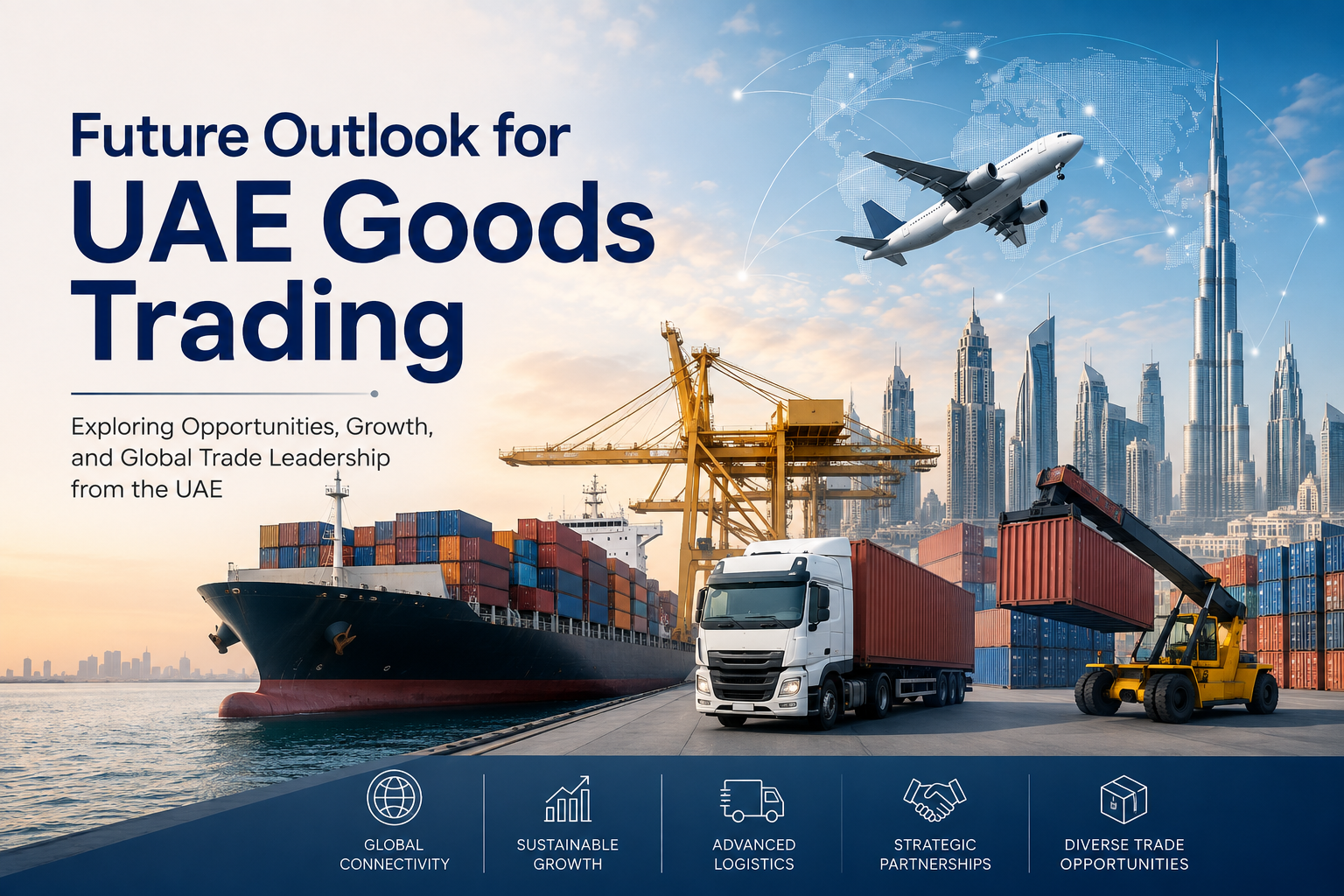
The United Arab Emirates has firmly established itself as one of the world’s most influential trading economies, connecting manufacturers, suppliers, distributors, retailers, and businesses across major international markets. Its strategic location between Asia, Europe, Africa, and the Middle East, combined with advanced logistics infrastructure and a business-friendly environment, has created strong foundations for long-term trade growth.
Dubai plays a particularly important role in this ecosystem. The emirate’s ports, airports, logistics zones, warehouses, and distribution networks allow businesses to move goods efficiently between international suppliers and regional markets. For companies involved in Trading UAE, these advantages create opportunities to source products globally, distribute them across the UAE and GCC, and expand into emerging markets.
Forton’s trading division supports this environment through wholesale distribution, retail solutions, global sourcing, market expansion, and B2B partnerships, helping businesses simplify procurement and build scalable supply chains.
As global commerce continues to change, the future of UAE goods trading will be influenced by technology, e-commerce, changing consumer demand, international partnerships, logistics development, and the growth of emerging markets.
Expansion of Global Trade Networks
One of the strongest factors supporting the future of Trading UAE is the country’s growing network of international commercial relationships. Businesses based in the UAE can use the country as a gateway to markets across the Middle East, Asia, Africa, and Europe.
International trade relationships can provide businesses with access to new suppliers, customers, manufacturing markets, and distribution opportunities. This creates an environment where UAE-based trading companies can operate beyond the domestic market and develop regional supply chains.
For importers and distributors, diversified international sourcing can also reduce dependence on individual suppliers or markets. Working with multiple manufacturing regions can help businesses improve supply chain resilience while accessing different product categories and price points.
Dubai as a Global Distribution Hub
Dubai is expected to remain at the center of the UAE’s future trading ecosystem. Its geographical position and interconnected transport infrastructure make it an effective base for regional distribution.
A business can source products from international manufacturers, bring them into the UAE, store them in local facilities, and distribute them to customers across the GCC and other nearby markets.
This model is particularly valuable for businesses that want to establish a regional presence without building separate supply chains in every market.
Professional trading companies can further simplify this process by managing sourcing, procurement, inventory, and delivery through an integrated supply chain.
Growth of Re-Export Trade
Re-exporting is another important opportunity for the future of UAE goods trading. The UAE can serve as an intermediary between international manufacturers and markets where direct distribution may be more difficult or less efficient.
Products can enter the UAE through established logistics channels before being distributed to other countries.
Dubai’s connectivity makes this model particularly attractive for companies serving customers across the GCC, Africa, South Asia, and other nearby markets.
As businesses continue looking for efficient regional distribution centers, re-export activity is likely to remain an important component of the UAE trading sector.
Increasing Demand for Consumer Goods
Changing consumer lifestyles and continued economic development are expected to support demand for imported and distributed products.
Categories such as FMCG, electronics, office supplies, hospitality products, personal care items, pantry products, and household goods can benefit from strong demand from businesses and consumers.
For trading companies, this creates opportunities to identify growing product categories and develop reliable distribution networks.
Forton, for example, supports businesses across multiple product categories, including FMCG and consumer goods, office and workplace supplies, hospitality and hotel supplies, corporate gifts, pantry products, and cleaning and hygiene products.
Technology Transforming Trade Operations
Technology will play a major role in the future of Trading UAE.
Traditional trading operations often involve multiple processes, including supplier communication, quotation management, purchasing, inventory tracking, documentation, logistics coordination, and customer communication.
Digital tools can connect these processes and provide businesses with greater visibility.
Automated inventory systems can help companies monitor stock levels, while digital procurement platforms can simplify purchasing. Shipment tracking can provide real-time visibility into deliveries, and data analytics can help businesses understand purchasing patterns and demand.
Artificial intelligence and automation are also expected to improve supplier identification, forecasting, procurement planning, and customer service.
For trading businesses, technology will increasingly become a competitive advantage rather than simply an operational tool.
Growth of E-Commerce Logistics
The expansion of e-commerce is creating another significant opportunity for UAE goods trading.
Online businesses need reliable systems for sourcing, inventory management, warehousing, order fulfillment, and delivery. As more businesses sell products across borders, the importance of regional distribution hubs will increase.
Dubai is well positioned to support this development because businesses can use its logistics infrastructure to store and distribute products to customers across multiple markets.
Trading companies that combine sourcing with warehousing and fulfillment can provide additional value to e-commerce businesses.
This creates opportunities for Trading UAE businesses to move beyond traditional wholesale activities and become integrated supply chain partners.
Strengthening Logistics Infrastructure
The UAE continues to benefit from significant investment in transport and logistics infrastructure.
Efficient movement of goods depends on reliable connections between ports, airports, warehouses, roads, and distribution centers. Dubai’s integrated logistics ecosystem provides businesses with multiple transportation options and supports both local and international supply chains.
For trading businesses, efficient logistics can reduce delivery times, improve inventory management, and support more predictable procurement.
As trade volumes increase, continued infrastructure development will be important for maintaining the UAE’s position as a global trading hub.
Opportunities in Emerging Markets
Emerging markets are likely to become increasingly important for UAE trading companies.
Countries and regions across Africa, Central Asia, Southeast Asia, and other developing markets are experiencing economic growth, urbanization, and increasing consumer demand.
UAE-based businesses can use Dubai’s strategic position to develop distribution networks serving these markets.
For companies considering international expansion, the UAE can function as a central procurement and distribution base.
Understanding local customer preferences, regulations, pricing, logistics requirements, and supplier relationships will be essential for successfully entering these markets.
Role of Free Zones in Goods Trading
Free zones remain an important component of the UAE’s international trading environment.
They provide businesses with dedicated commercial infrastructure and convenient access to logistics networks. Trading companies can use free-zone ecosystems to support activities such as sourcing, storage, distribution, and international commerce, subject to applicable regulations.
The availability of specialized business infrastructure also makes the UAE attractive to international companies seeking regional operating bases.
As global companies continue to evaluate their supply chains, the UAE’s free-zone ecosystem can support businesses looking to establish regional distribution operations.
Global Sourcing Will Become More Important
The future of Trading UAE will also depend heavily on effective global sourcing.
Businesses increasingly need access to reliable suppliers that can provide the right combination of quality, pricing, production capacity, and delivery reliability.
Professional sourcing services can help companies identify manufacturers, evaluate suppliers, compare commercial terms, manage samples, and reduce procurement risks.
Forton’s product sourcing service, for example, connects businesses with international manufacturers and suppliers while supporting supplier evaluation, negotiation, sample management, and supplier verification.
This approach allows businesses to focus on their core operations while their trading partner manages complex sourcing requirements.
Greater Focus on B2B Partnerships
The future of trading is likely to move increasingly toward long-term partnerships rather than simple supplier-buyer transactions.
Businesses want trading partners that can provide more than products. They increasingly require sourcing support, logistics coordination, inventory management, market knowledge, product development, and flexible supply solutions.
This is why B2B partnerships are becoming an important component of the modern trading model.
Forton positions its trading services around long-term B2B relationships, dedicated account management, flexible supply arrangements, quality assurance, and single-source procurement across multiple categories.
Private Label and Market Expansion Opportunities
Private-label products are another area with significant potential.
Retailers and distributors can use private-label strategies to create differentiated product ranges and establish stronger brand identities. Instead of competing solely through established brands, businesses can develop products specifically for their target customers.
A capable trading partner can support private-label development through sourcing, supplier coordination, product selection, and supply chain management.
This can create opportunities for businesses that want to expand their product portfolios across the UAE and GCC.
Future Outlook for Trading UAE
The overall outlook for Trading UAE remains highly promising.
The country’s strategic location, logistics infrastructure, international connectivity, supplier networks, and growing regional markets provide a strong foundation for continued expansion.
However, future success will depend on how effectively businesses adapt.
Trading companies that embrace digital technology, diversify sourcing networks, improve inventory management, understand emerging markets, and develop reliable B2B partnerships will be better positioned to compete.
The traditional role of a trading company is also evolving. Instead of simply buying and selling products, modern trading businesses increasingly operate as strategic supply chain partners.
They help businesses source globally, manage procurement, distribute products, enter new markets, and build resilient supply chains.
How Businesses Can Prepare for the Future
Companies looking to benefit from the future of UAE goods trading should focus on several key areas:
- Build diversified supplier networks.
- Invest in digital procurement and inventory systems.
- Develop reliable logistics and warehousing processes.
- Monitor emerging product categories and markets.
- Strengthen B2B supplier relationships.
- Consider private-label opportunities where appropriate.
- Maintain strong quality-control processes.
- Understand UAE and international trade requirements.
- Explore opportunities across the GCC and emerging markets.
- Work with experienced trading and sourcing partners.
A strategic approach can help businesses reduce supply chain complexity while creating opportunities for sustainable growth.
Conclusion
The future of UAE goods trading is closely connected to the country’s continued development as a global commercial and logistics hub. Strategic geography, advanced infrastructure, international connectivity, growing consumer demand, and expanding regional markets provide significant opportunities for businesses involved in import, export, wholesale, distribution, and re-export.
Dubai will remain a particularly important center for these activities, connecting international suppliers with businesses and customers across the UAE, GCC, and wider global markets.
Technology, e-commerce, global sourcing, private-label development, and emerging markets will further reshape the trading landscape.
For businesses seeking to take advantage of these opportunities, having the right trading partner can make supply chain management more efficient and scalable. Forton’s trading division provides wholesale distribution, retail solutions, global sourcing, market expansion, B2B partnerships, and private-label solutions designed to support businesses across the UAE and GCC.
As international commerce continues to evolve, the UAE is well positioned to remain a major hub for global goods trading. Businesses that combine strong sourcing strategies, efficient logistics, technology, and long-term partnerships can take advantage of the opportunities emerging in the next phase of Trading UAE.
FAQs
What is the future outlook for goods trading in the UAE?
The future outlook for UAE goods trading remains highly positive, supported by the country’s strategic location, advanced logistics infrastructure, international trade relationships, and growing regional markets. Continued investment in technology and infrastructure is expected to create further opportunities for trading businesses.
Why is the UAE important for international goods trading?
The UAE is an important international trading hub because it connects major markets across Asia, Europe, Africa, and the Middle East. Its ports, airports, free zones, logistics facilities, and business-friendly environment support efficient import, export, distribution, and re-export activities.
Why is Dubai a major trading hub in the UAE?
Dubai is a major trading hub because of its world-class logistics infrastructure, strategic location, ports, airports, warehouses, and extensive international connectivity. These advantages allow businesses to import goods and distribute them efficiently across GCC and other regional markets.
Is re-export trading expected to grow in the UAE?
Re-export trading is expected to remain an important part of the UAE’s goods trading sector. Businesses can import products from international suppliers and redistribute them to markets across the Middle East, Africa, South Asia, and other regions.
What trading opportunities are growing in the UAE?
Growing opportunities include consumer goods, electronics, home appliances, personal care products, fashion, e-commerce fulfillment, distribution, and international import-export activities. Demand from the UAE and surrounding regional markets continues to support these trading segments.
How is technology changing trading in the UAE?
Technology is making UAE trading operations faster, more transparent, and more efficient through automation, digital documentation, inventory management, and real-time shipment tracking. Digital systems can help trading companies improve supply chain visibility and reduce administrative processes.
How will e-commerce affect goods trading in the UAE?
The continued growth of e-commerce is expected to create new opportunities for goods trading in the UAE by increasing demand for international sourcing, warehousing, fulfillment, and regional distribution. Dubai’s logistics infrastructure provides a strong base for cross-border e-commerce operations.
What role do UAE free zones play in goods trading?
UAE free zones provide trading businesses with modern infrastructure, logistics connectivity, and an environment designed to support international commerce. Companies can use free-zone facilities for activities such as importing, storing, distributing, and re-exporting goods, subject to the applicable rules.
Which emerging markets offer opportunities for UAE trading companies?
Africa, Central Asia, Southeast Asia, and other developing markets offer potential opportunities for UAE trading companies. Rising populations, economic development, and increasing consumer demand can create new markets for businesses using the UAE as a regional distribution and trading base.
How can businesses benefit from Trading UAE opportunities?
Businesses can benefit from Trading UAE opportunities by using the country’s logistics network, international connectivity, distribution infrastructure, and access to regional markets. Working with an experienced trading partner can also help companies manage sourcing, distribution, import-export activities, and expansion into new markets.

About the Author