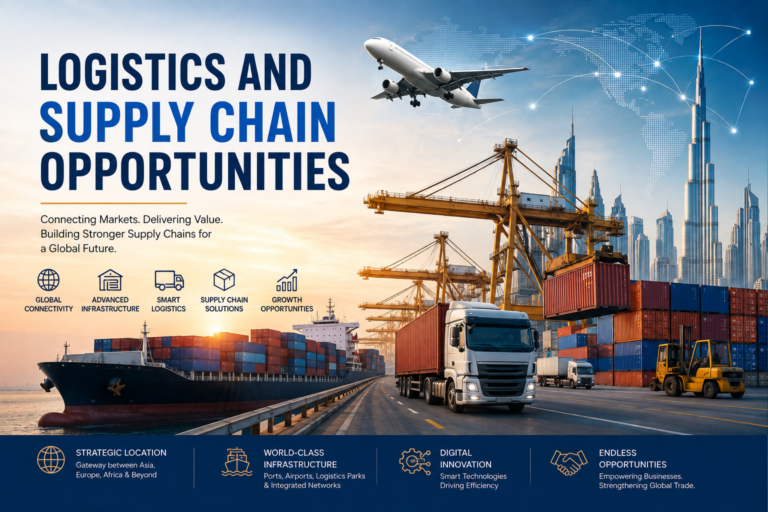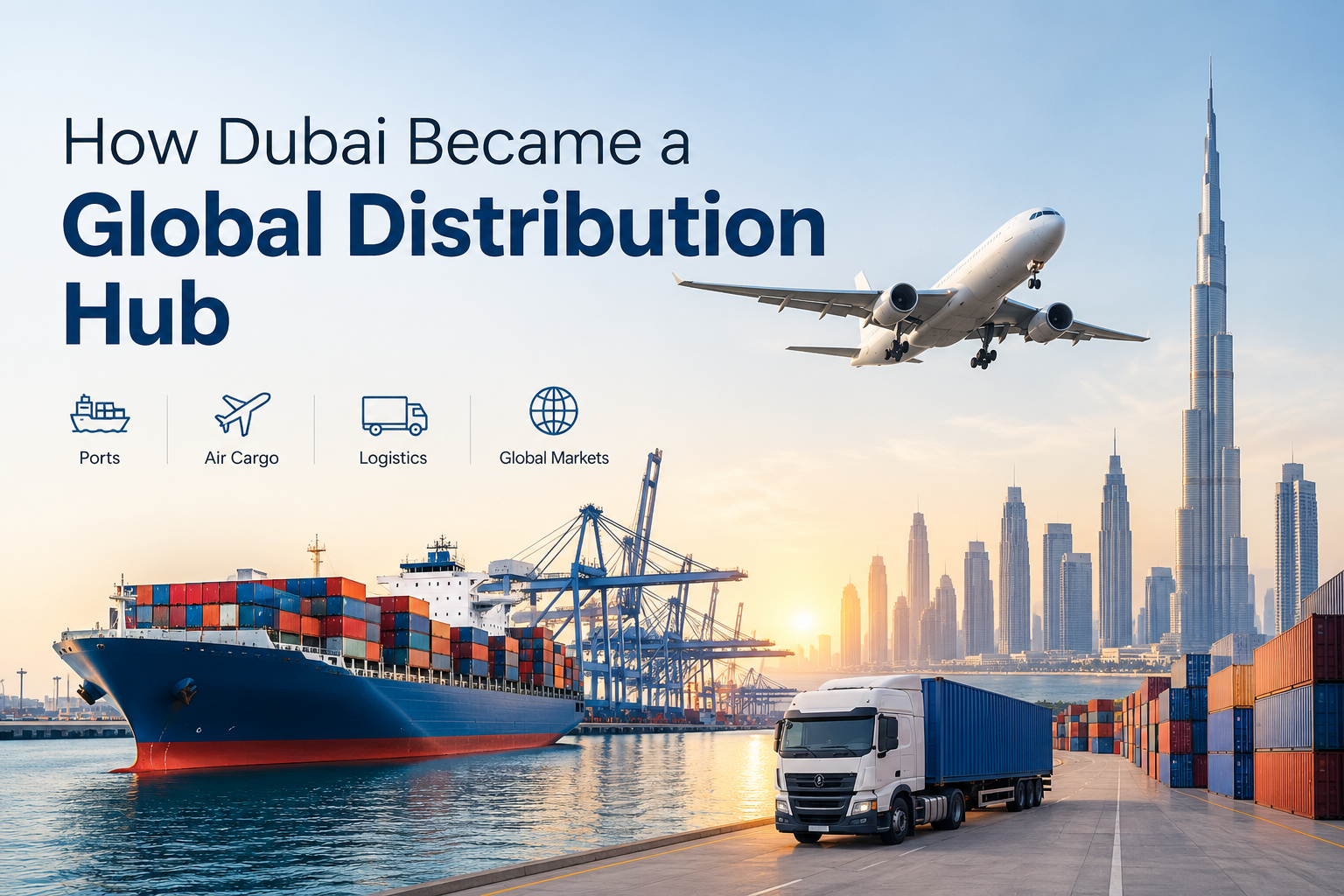
Dubai has become one of the most important distribution hubs in the global economy. Located at the crossroads of Asia, Europe, and Africa, the city has built a highly efficient logistics ecosystem that connects international manufacturers with regional and global markets. Through strategic investments in infrastructure, world-class ports, advanced logistics networks, and business-friendly policies, Dubai has positioned itself as a gateway for international trade.
Over the past few decades, Dubai has transformed from a regional trading center into a global logistics powerhouse. Companies from around the world use Dubai as a base for distributing products across the Middle East, Africa, and South Asia. The emirate’s integrated supply chain infrastructure allows goods to move quickly and efficiently between global markets.
Dubai’s success as a distribution hub reflects the city’s long-term economic vision. By investing in transportation networks, free zones, and digital trade platforms, Dubai has created an environment that supports international commerce and supply chain efficiency.
Strategic Geographic Location
One of the most important factors behind Dubai’s rise as a global distribution hub is its strategic geographic location. The city sits at the intersection of three major continents: Asia, Europe, and Africa.
This location allows businesses to reach a large portion of the global population within an eight-hour flight radius. Companies operating from Dubai can distribute products efficiently to markets across the Middle East, North Africa, South Asia, and Central Asia.
Dubai’s central position in global shipping routes has made it an ideal logistics center for companies seeking to connect international supply chains.
World-Class Ports and Maritime Infrastructure
Dubai’s maritime infrastructure plays a central role in supporting global distribution activities. The emirate has developed some of the most advanced port facilities in the world.
Jebel Ali Port
Jebel Ali Port is the largest container port in the Middle East and one of the busiest ports globally. The port connects to hundreds of international shipping routes and handles millions of containers every year.
- Deep-water berths capable of accommodating large cargo ships
- Advanced container handling technology
- Integrated logistics and warehouse facilities
- Efficient customs clearance systems
The port’s massive capacity allows Dubai to handle large volumes of cargo and distribute goods to regional markets quickly.
Advanced Air Cargo Infrastructure
Dubai’s aviation infrastructure complements its maritime logistics capabilities. The city is home to major international airports that support large-scale cargo operations.
Dubai International Airport and Al Maktoum International Airport provide extensive air freight services that connect Dubai to global markets. These airports enable companies to transport high-value and time-sensitive goods rapidly.
The integration of air and sea logistics creates a powerful multimodal transportation system that enhances Dubai’s role as a global distribution center.
Free Zones Supporting Global Trade
Free zones have played a crucial role in Dubai’s rise as a distribution hub. These economic zones provide businesses with attractive incentives designed to encourage international trade and investment.
Key advantages include:
- 100% foreign ownership
- Tax advantages
- Simplified company setup procedures
- Access to world-class logistics infrastructure
Major free zones such as Jebel Ali Free Zone (JAFZA), Dubai Multi Commodities Centre (DMCC), and Dubai Airport Free Zone (DAFZ) host thousands of international companies engaged in trading and logistics activities.
Efficient Logistics and Supply Chain Networks
Dubai’s logistics sector has developed into one of the most advanced in the world. The city offers integrated transportation systems that connect sea, air, and land logistics networks.
These networks allow businesses to move goods efficiently between suppliers, warehouses, and customers.
Key components of Dubai’s logistics ecosystem include:
- Modern highways connecting Gulf markets
- Large-scale warehousing and distribution facilities
- Specialized logistics parks
- Digital customs and trade platforms
These systems ensure that cargo moves quickly through supply chains and reaches regional markets efficiently.
Dubai as a Re-Export Hub
Dubai is widely recognized as one of the world’s leading re-export centers. Re-export trade involves importing goods and then exporting them again to other markets without significant modification.
Companies often use Dubai as a central distribution point for products manufactured in Asia, Europe, and North America.
Common re-exported products include:
- Consumer electronics
- Automobiles and spare parts
- Industrial machinery
- Textiles and garments
- Household goods
Dubai’s logistics infrastructure allows these products to be stored, processed, and redistributed efficiently.
Business-Friendly Government Policies
Dubai’s government has implemented policies that support trade, investment, and entrepreneurship. These policies create a favorable environment for international companies seeking to establish regional distribution operations.
Key policies include:
- Low trade barriers
- Efficient customs systems
- Support for foreign investment
- Strong regulatory transparency
These initiatives encourage companies from around the world to establish logistics operations in Dubai.
Technology and Innovation in Logistics
Dubai has embraced technology to improve logistics efficiency and supply chain management. Innovations such as smart ports, digital customs platforms, and automated container terminals help streamline trade processes.
Technology also allows businesses to track shipments, manage inventory, and optimize transportation routes.
Dubai’s commitment to digital transformation continues to strengthen its position as a global logistics leader.
Global Trade Connectivity
Dubai maintains strong trade relationships with countries around the world. Goods imported into the emirate are distributed to markets across the Middle East, Africa, Europe, and Asia.
The presence of multinational corporations, international banks, and logistics companies further enhances Dubai’s global trade connectivity.
This network of commercial partnerships helps maintain Dubai’s reputation as a leading distribution hub.
Future Outlook for Dubai’s Distribution Industry
Dubai continues to invest in infrastructure and logistics innovation to strengthen its role in global supply chains. Expansion of ports, airports, and logistics parks will further enhance the city’s distribution capabilities.
Emerging technologies such as artificial intelligence, automation, and smart logistics systems are expected to improve supply chain efficiency.
As global trade continues to expand, Dubai’s strategic location and advanced infrastructure will ensure its continued success as a global distribution hub.
Conclusion
Dubai’s transformation into a global distribution hub is the result of visionary leadership, strategic investments, and a strong commitment to international trade.
Through world-class ports, advanced logistics infrastructure, free zones, and supportive business policies, Dubai has created an environment that enables companies to distribute products efficiently across multiple regions.
Today, Dubai stands as one of the most important gateways for global commerce, connecting businesses and markets across continents. As the city continues to innovate and expand its logistics capabilities, its role as a global distribution hub will only grow stronger.
FAQs
1. Why has Dubai become a global distribution hub?
Dubai has become a global distribution hub because of its strategic location between Asia, Europe, and Africa, advanced ports and airports, efficient logistics networks, and business-friendly free zones. These advantages help companies distribute goods to international markets efficiently.
2. What makes Dubai an important logistics hub?
Dubai’s importance as a logistics hub comes from its integrated sea, air, and road transportation networks. Facilities such as Jebel Ali Port, Dubai International Airport, and major logistics parks support international shipping, warehousing, and regional distribution.
3. How does Dubai’s geographic location benefit international trade?
Dubai’s location connects major markets across the Middle East, Africa, Asia, and Europe. This geographic advantage allows businesses to use the emirate as a central point for transporting, storing, and distributing products across multiple regions.
4. What role does Jebel Ali Port play in Dubai’s distribution industry?
Jebel Ali Port is a major maritime gateway for the UAE and the wider region. It supports container shipping, international cargo movement, and re-export activities while providing access to logistics facilities and distribution networks.
5. Why do international companies choose Dubai for distribution?
International companies choose Dubai because it offers strong global connectivity, modern logistics infrastructure, access to regional markets, business-friendly regulations, and specialized free zones. These factors make it an attractive base for regional distribution and supply chain operations.
6. How do Dubai’s free zones support global distribution?
Dubai’s free zones provide businesses with specialized infrastructure, streamlined setup procedures, and trade-related advantages. Locations such as Jebel Ali Free Zone (JAFZA) and Dubai Airport Free Zone (DAFZ) support logistics, warehousing, import-export, and distribution activities.
7. What is Dubai’s role in re-export trade?
Dubai acts as a major re-export hub by importing goods and redistributing them to other countries, often without substantial modification. Common products include electronics, machinery, automotive parts, textiles, and consumer goods.
8. How does Dubai connect air freight and sea freight?
Dubai combines maritime facilities with international air cargo networks, enabling businesses to select transportation methods based on cost, delivery speed, and cargo requirements. This multimodal connectivity is particularly useful for time-sensitive shipments and regional distribution.
9. Which industries benefit from Dubai’s distribution network?
Industries benefiting from Dubai’s distribution network include consumer electronics, automotive, industrial equipment, food and beverage, textiles, retail, and e-commerce. The city’s logistics infrastructure helps businesses store and distribute products across the UAE and international markets.
10. What is the future of Dubai as a global distribution hub?
Dubai’s distribution industry is expected to benefit from continued infrastructure investment, digital trade systems, warehouse automation, artificial intelligence, and smart logistics technologies. These developments can improve supply chain visibility, operational efficiency, and international trade connectivity.

About the Author