October 8, 2025
Logistics and Supply Chain Opportunities
The logistics and supply chain sector has become one of the most important pillars of…
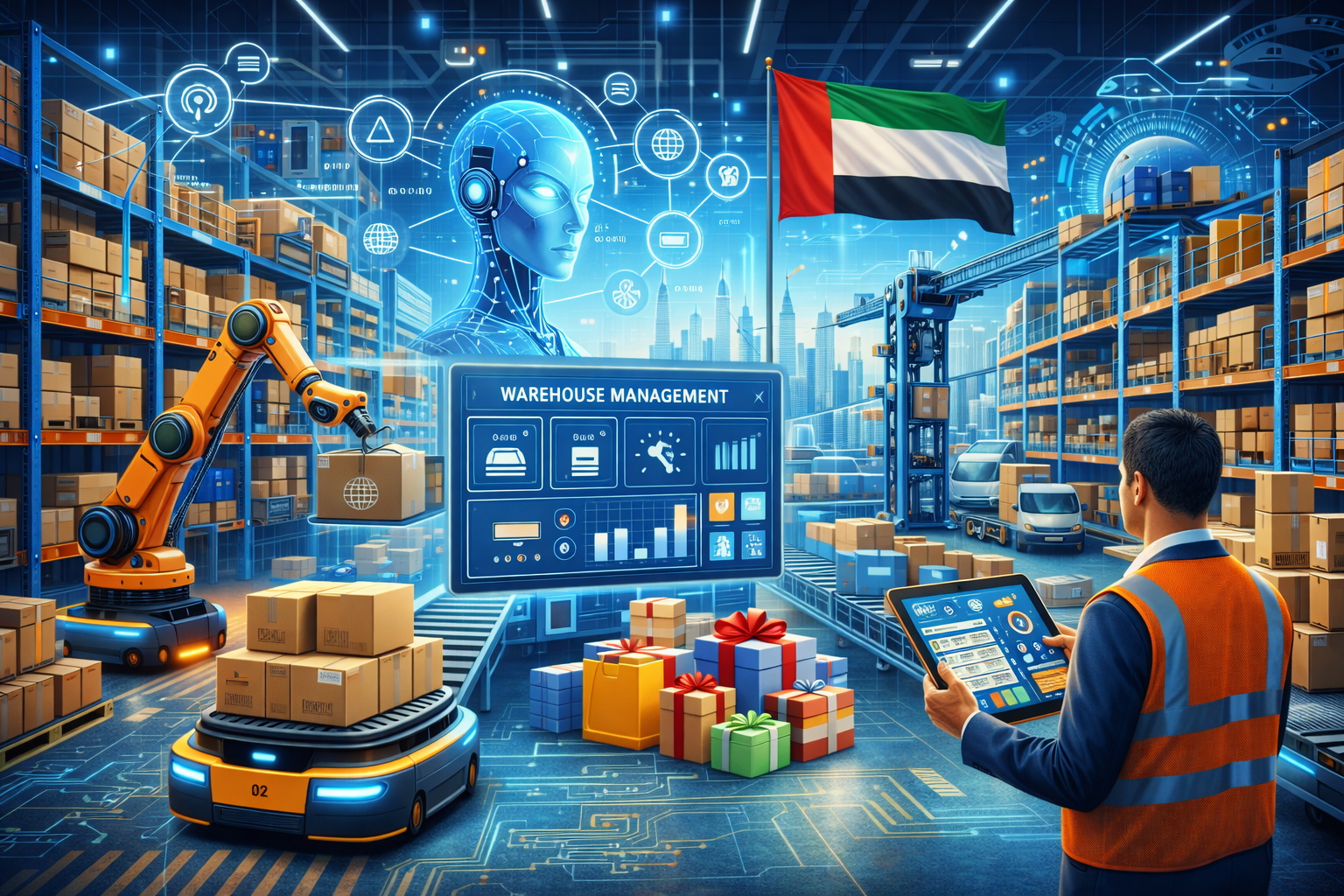
Warehouse and inventory management have become essential components of modern supply chain operations. As global trade expands and consumer expectations for faster delivery increase, businesses must adopt advanced strategies to manage inventory efficiently and ensure seamless product distribution. Effective warehouse management allows companies to maintain accurate stock levels, optimize storage space, and improve order fulfillment processes.
Dubai and the United Arab Emirates have emerged as key logistics hubs where businesses rely on sophisticated warehousing systems and supply chain technologies. The region’s advanced logistics infrastructure, modern distribution centers, and digital trade platforms support efficient inventory management across various industries.
Companies engaged in international trade, retail distribution, and e-commerce must continuously adapt to new warehouse and inventory management trends. By leveraging innovative technologies and optimized operational strategies, businesses can enhance efficiency and maintain competitive advantages in global markets.
This article explores the latest trends shaping warehouse and inventory management and explains how businesses can benefit from these developments.
Automation is transforming warehouse operations around the world. Automated systems allow businesses to streamline tasks such as sorting, packaging, and inventory tracking.
Technologies such as automated storage and retrieval systems (AS/RS), robotic picking systems, and conveyor automation improve warehouse productivity.
Automation reduces manual labor requirements and improves operational accuracy.
Companies that adopt automated solutions can process orders faster and manage larger volumes of inventory efficiently.
Warehouse management systems are digital platforms designed to coordinate warehouse operations and track inventory movement. These systems provide real-time visibility into stock levels, order status, and warehouse activities.
A WMS allows businesses to optimize storage layouts, monitor product movement, and manage order fulfillment more effectively.
Integration with other supply chain systems such as transportation management platforms improves overall logistics coordination.
Digital warehouse management systems are becoming essential tools for modern distribution centers.
Real-time inventory tracking is a growing trend in warehouse management. Businesses use technologies such as barcode scanning, radio frequency identification (RFID), and IoT sensors to monitor inventory levels continuously.
These systems allow companies to track product locations and movement within warehouses.
Real-time data improves accuracy and helps prevent stock shortages or overstocking.
Accurate inventory tracking also enhances order fulfillment efficiency.
The growth of e-commerce has significantly increased demand for modern fulfillment centers. These facilities are designed to handle large volumes of online orders and support rapid product delivery.
E-commerce warehouses use optimized picking systems and automated sorting technologies to process orders quickly.
Strategically located fulfillment centers allow businesses to deliver products to customers faster.
This trend is particularly important for retailers operating in global online marketplaces.
Data analytics is becoming a powerful tool for managing inventory efficiently. Businesses use data-driven insights to forecast demand, optimize stock levels, and improve procurement planning.
Advanced analytics platforms analyze historical sales data and market trends to predict future demand patterns.
These insights allow companies to adjust inventory levels proactively.
Data-driven strategies improve supply chain efficiency and reduce operational costs.
Smart warehouse technologies are reshaping the logistics industry. Artificial intelligence, machine learning, and IoT devices are being integrated into warehouse operations.
These technologies allow businesses to automate decision-making processes and improve operational efficiency.
For example, AI-powered systems can optimize warehouse layouts and recommend efficient picking routes.
Smart technologies enable warehouses to operate more efficiently and respond quickly to changing demand.
Businesses are increasingly adopting flexible storage solutions to accommodate changing inventory requirements. Modular shelving systems and adjustable storage configurations allow warehouses to adapt quickly to different product sizes and volumes.
Flexible storage improves space utilization and reduces the need for additional warehouse facilities.
This approach is particularly beneficial for businesses experiencing seasonal demand fluctuations.
Optimized storage systems enhance overall warehouse efficiency.
Sustainability is becoming an important focus in warehouse and logistics operations. Many companies are adopting environmentally responsible practices to reduce energy consumption and improve operational efficiency.
Energy-efficient lighting, solar power installations, and sustainable building materials are increasingly used in modern warehouses.
These initiatives support long-term environmental goals while reducing operational costs.
Sustainable warehouses align with global efforts toward responsible supply chain management.
Warehouse operations are becoming more closely integrated with broader supply chain networks. Businesses now connect warehouse systems with transportation management platforms and supplier systems.
This integration improves coordination across logistics operations and enhances supply chain visibility.
Companies can track shipments from suppliers to warehouses and from warehouses to customers.
Integrated systems allow businesses to manage complex supply chains more effectively.
Regional distribution hubs are playing an increasingly important role in global logistics. Companies often establish centralized warehouses that serve multiple markets.
Dubai has become a major regional distribution center where businesses store inventory and distribute goods across the Middle East, Africa, and South Asia.
This model allows companies to manage inventory efficiently and reduce transportation times.
Regional hubs strengthen global supply chain networks.
The future of warehouse and inventory management will continue to evolve as new technologies and logistics strategies emerge. Automation, artificial intelligence, and digital supply chain platforms are expected to further enhance warehouse efficiency.
Businesses will increasingly rely on data-driven insights to optimize inventory levels and improve operational planning.
Continued investment in logistics infrastructure across the UAE will support advanced warehousing capabilities.
These developments will strengthen the region’s position as a leading global logistics hub.
Warehouse and inventory management trends are transforming how businesses handle logistics and distribution. Automation, digital management systems, real-time tracking, and data analytics are improving operational efficiency across supply chains.
Dubai and the UAE provide an ideal environment for advanced warehousing operations thanks to world-class infrastructure and strong global connectivity.
Companies that adopt modern warehouse management strategies can improve productivity, reduce operational costs, and enhance customer satisfaction.
As global trade continues to grow, efficient warehouse and inventory management will remain a key factor in successful supply chain operations.
The logistics and supply chain sector has become one of the most important pillars of…

Dubai continues to strengthen its position as one of the world’s leading logistics and trade…
Dubai has established itself as one of the world’s most important logistics and trade centers,…