October 8, 2025
Logistics and Supply Chain Opportunities
The logistics and supply chain sector has become one of the most important pillars of…
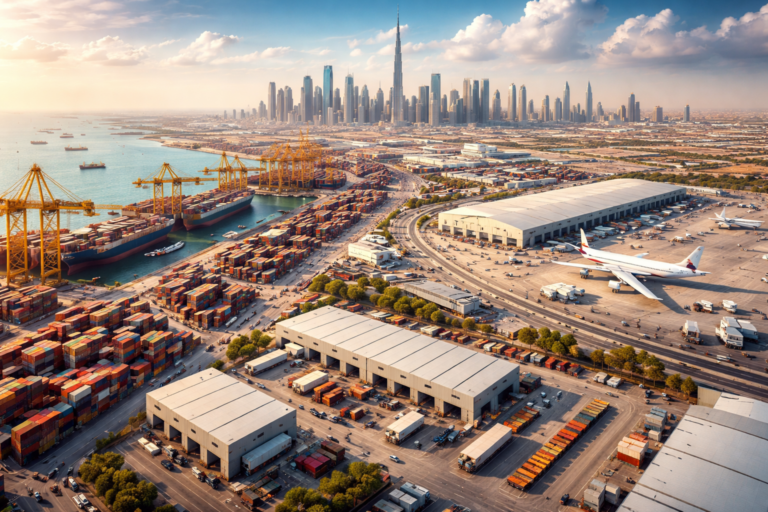
The United Arab Emirates has developed one of the most advanced logistics ecosystems in the world, playing a crucial role in facilitating global trade. With its strategic location connecting Asia, Europe, and Africa, the UAE serves as a central gateway for international commerce. Modern logistics hubs across the country support efficient movement of goods, enabling businesses to manage supply chains and distribution networks seamlessly.
Dubai, in particular, has emerged as a global logistics powerhouse. The emirate’s world-class ports, airports, free zones, and transportation infrastructure enable companies to import, export, and re-export goods across regional and international markets. These logistics hubs provide the foundation for the UAE’s position as a leading trade center.
As global trade volumes continue to grow, the role of logistics hubs in supporting supply chains, warehousing, and distribution is becoming increasingly important. Businesses operating in the UAE benefit from integrated logistics networks that combine maritime, aviation, road, and digital trade systems.
This article explores the major logistics hubs in the UAE and explains how they support international trade and economic growth.
Logistics hubs are specialized centers where transportation, warehousing, and distribution activities are integrated to support efficient supply chains. These hubs allow goods to be stored, sorted, and transported to various destinations.
In global trade, logistics hubs reduce shipping times, improve inventory management, and streamline customs procedures.
Businesses benefit from centralized operations that allow them to manage international shipments more efficiently.
Strong logistics infrastructure is therefore essential for countries seeking to become major trade hubs.
Dubai plays a central role in the UAE’s logistics ecosystem. The emirate’s strategic location places it within reach of major global markets, allowing businesses to distribute goods quickly across multiple regions.
Dubai’s integrated transportation infrastructure combines seaports, airports, logistics parks, and industrial zones.
This connectivity allows businesses to manage complex supply chains from a single location.
As a result, many international companies establish regional distribution centers in Dubai.
Jebel Ali Port is one of the largest and most advanced container ports in the world. It serves as a primary gateway for maritime trade in the region.
The port connects shipping routes across Asia, Europe, Africa, and the Americas.
Located next to the Jebel Ali Free Zone, the port provides businesses with direct access to logistics services, warehouses, and distribution facilities.
This integration allows companies to import goods and distribute them efficiently across regional markets.
Dubai South is a large logistics and aviation district designed to support global trade activities. It includes Al Maktoum International Airport, which is being developed as one of the world’s largest aviation hubs.
The airport supports large-scale cargo operations and provides efficient air freight services.
Businesses located within Dubai South benefit from close proximity to logistics providers and transportation networks.
This hub plays an important role in facilitating international air cargo trade.
Abu Dhabi also contributes significantly to the UAE’s logistics capabilities. The emirate has invested heavily in ports, industrial zones, and logistics corridors.
Khalifa Port serves as a major maritime gateway supporting container shipping and industrial development.
Nearby industrial zones provide manufacturing facilities and logistics services for businesses.
These developments strengthen Abu Dhabi’s role in regional trade and supply chain management.
Sharjah offers strong logistics connectivity through its ports and transportation infrastructure. The emirate operates multiple ports that handle cargo shipments across the Gulf and Indian Ocean regions.
Sharjah’s logistics zones provide warehouses and distribution centers that support regional trade.
Businesses operating in Sharjah benefit from efficient transportation links connecting the emirate to Dubai and other markets.
This connectivity enhances the UAE’s overall logistics capacity.
Free zones across the UAE play a significant role in supporting logistics operations. These zones provide specialized environments designed to facilitate international trade and distribution activities.
Companies operating within free zones benefit from modern infrastructure, efficient trade systems, and proximity to transportation hubs.
Many logistics companies establish warehouses and distribution centers in these zones.
This integration allows businesses to manage regional supply chains efficiently.
Technology is transforming logistics operations across the UAE. Digital trade platforms, automated warehouses, and smart logistics systems are improving supply chain efficiency.
Advanced tracking technologies allow businesses to monitor shipments in real time.
Automation systems improve inventory management and reduce operational delays.
These innovations strengthen the UAE’s position as a leader in modern logistics solutions.
Logistics hubs play a critical role in supporting the UAE’s re-export trade activities. Goods imported into the country are often redistributed to neighboring markets through efficient distribution networks.
Dubai’s logistics hubs enable companies to consolidate shipments and distribute them across regional markets.
This model allows businesses to reach customers in the Middle East, Africa, and South Asia.
Re-export trade contributes significantly to the UAE’s international commerce ecosystem.
The growth of e-commerce has increased demand for efficient logistics and fulfillment services. Logistics hubs across the UAE support online retailers by providing warehousing, inventory management, and distribution solutions.
E-commerce companies can store products in regional fulfillment centers and deliver them quickly to customers.
Dubai’s logistics infrastructure supports fast order processing and reliable delivery networks.
This capability strengthens the UAE’s role in digital commerce.
The future of logistics hubs in the UAE looks highly promising as global trade continues to expand. Continued investments in infrastructure, technology, and international partnerships will further strengthen supply chain efficiency.
Smart logistics systems and digital trade platforms are expected to play an even greater role in managing international shipments.
The UAE’s strategic location and advanced infrastructure will continue to attract global logistics companies.
These developments ensure that the country remains a leading hub for international trade.
Logistics hubs are essential components of the UAE’s global trade ecosystem. Through advanced ports, airports, logistics zones, and transportation networks, the country has built one of the most efficient supply chain infrastructures in the world.
Dubai, Abu Dhabi, and other emirates continue to invest in logistics development to support international commerce.
These logistics hubs enable businesses to import, export, and distribute goods across global markets efficiently.
As international trade continues to grow, the UAE’s logistics infrastructure will remain a key driver of economic development and global connectivity.
The logistics and supply chain sector has become one of the most important pillars of…
Dubai continues to strengthen its position as one of the world’s leading logistics and trade…
Dubai has established itself as one of the world’s most important logistics and trade centers,…