February 11, 2026
Expanding GCC-Asia Trade Routes
Trade between the Gulf Cooperation Council (GCC) countries and Asia has grown significantly in recent…
The United Arab Emirates has become one of the most active countries in developing international trade agreements that support economic growth and global business expansion. These agreements not only strengthen international trade relationships but also create significant opportunities for small and medium-sized enterprises (SMEs).
Dubai plays a central role in enabling SMEs to take advantage of these trade deals. With its advanced logistics infrastructure, modern ports, and global connectivity, the emirate provides an ideal platform for smaller businesses to expand beyond local markets.
For SMEs operating in the UAE, trade agreements can reduce costs, open access to new markets, and create opportunities to participate in global supply chains.
Trade agreements are partnerships between countries designed to facilitate international commerce. These agreements often focus on reducing tariffs, improving customs procedures, and strengthening economic cooperation.
The UAE has actively signed several economic partnership agreements that help local businesses access global markets more easily.
For SMEs, these agreements create a more favorable environment for exporting products and sourcing materials from international suppliers.
One of the most important benefits of trade agreements is the reduction of import tariffs. Lower tariffs reduce the cost of raw materials, equipment, and products imported by SMEs.
By importing goods at lower costs, businesses can improve their pricing strategies and increase competitiveness in local and regional markets.
This cost advantage allows SMEs to expand their operations while maintaining sustainable profit margins.
Trade agreements open doors to new export markets for small and medium-sized enterprises. SMEs can supply goods and services to international partners without facing significant trade barriers.
Dubai’s strategic location between Asia, Europe, and Africa allows businesses to reach multiple global markets from a single trade hub.
This global connectivity helps SMEs expand their customer base and increase revenue opportunities.
Participation in international trade agreements allows SMEs to become part of larger global supply chains. Companies can partner with international manufacturers, distributors, and logistics providers.
Dubai’s logistics ecosystem, including modern ports, airports, and warehousing facilities, supports efficient supply chain management.
This integration enables SMEs to operate at a global scale.
Dubai’s free zones provide additional advantages for SMEs involved in international trade. These zones offer modern infrastructure and strong connectivity to global markets.
Businesses operating in free zones benefit from efficient trade procedures and specialized services designed to support international commerce.
This environment helps SMEs manage imports, exports, and re-export operations more efficiently.
Technology is transforming global trade, and SMEs are increasingly using digital platforms to connect with international buyers and suppliers.
Online marketplaces, digital customs systems, and smart logistics platforms allow businesses to manage trade operations more efficiently.
Dubai’s commitment to digital transformation helps SMEs participate in modern global trade networks.
Small and medium-sized enterprises play an important role in the UAE’s economic diversification strategy. Trade agreements help entrepreneurs expand their businesses beyond domestic markets.
As SMEs grow, they contribute to job creation, innovation, and long-term economic development.
Dubai’s supportive business environment continues to encourage entrepreneurship and global trade participation.
The UAE is expected to continue expanding its network of international trade agreements in the coming years. These agreements will create additional opportunities for SMEs to access global markets and participate in international supply chains.
Dubai’s position as a leading logistics and trade hub ensures that SMEs operating in the emirate will benefit from these developments.
Businesses that leverage trade agreements effectively can achieve long-term growth and global expansion.
Trade agreements provide valuable opportunities for SMEs in the UAE by reducing trade barriers, lowering import costs, and expanding access to international markets.
Dubai’s global connectivity and advanced trade infrastructure make it an ideal platform for smaller businesses seeking international growth.
As the UAE continues to strengthen global trade partnerships, SMEs will play an increasingly important role in the country’s expanding international trade ecosystem.
Trade between the Gulf Cooperation Council (GCC) countries and Asia has grown significantly in recent…
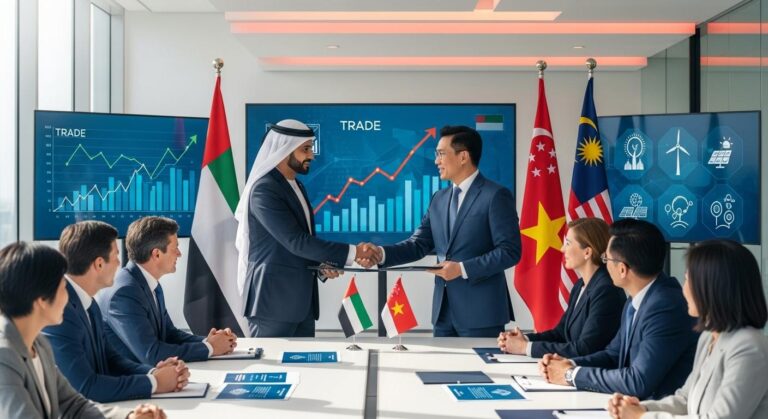
The economic relationship between the United Arab Emirates and Vietnam has grown steadily over the…

The United Arab Emirates continues to expand its global trade network through new economic and…