July 17, 2024
Freight Forwarding Trends in UAE
The United Arab Emirates has become one of the most important logistics and trade centers…
The global trade logistics industry is undergoing a major technological transformation, and artificial intelligence (AI) is at the center of this evolution. As international trade volumes continue to grow and supply chains become increasingly complex, logistics companies are adopting AI-powered solutions to improve efficiency, reduce operational costs, and enhance decision-making.
AI technologies enable logistics providers to analyze large volumes of data, automate repetitive tasks, and optimize supply chain operations in real time. From demand forecasting and route optimization to warehouse automation and predictive maintenance, AI is reshaping how goods move across global markets.
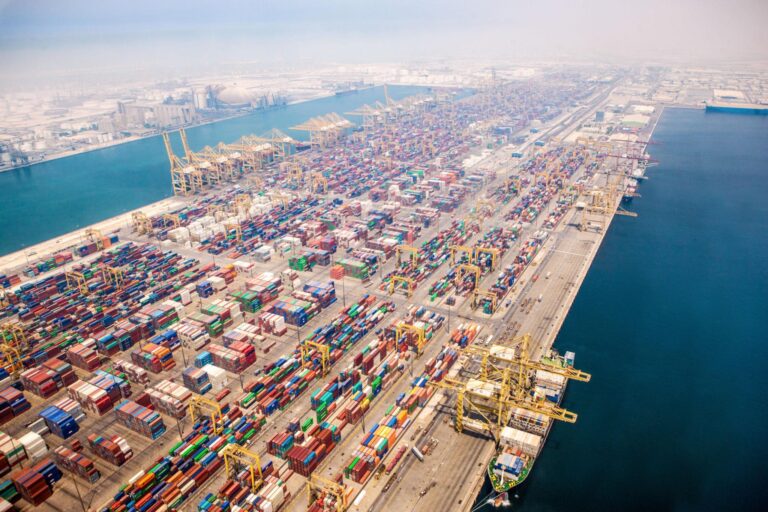
Dubai and the United Arab Emirates have positioned themselves as leaders in adopting advanced technologies within the logistics sector. With world-class infrastructure, digital trade platforms, and innovation-driven economic strategies, the region continues to integrate artificial intelligence into logistics operations to enhance global trade connectivity.
This article explores the role of AI in trade logistics, the technologies driving innovation, and how businesses are leveraging artificial intelligence to create more efficient and resilient supply chains.
Artificial intelligence has become one of the most influential technologies in modern logistics. By processing large datasets and identifying patterns, AI systems can improve supply chain planning and operational efficiency.
Logistics companies use AI-powered software to monitor shipments, manage warehouse inventory, and analyze demand trends. These systems provide valuable insights that help businesses make faster and more informed decisions.
AI also enables automation in various logistics processes, reducing manual workloads and improving operational accuracy.
As global trade networks expand, AI technologies are becoming essential tools for managing complex logistics operations.
One of the most valuable applications of AI in trade logistics is predictive analytics. AI algorithms analyze historical data, market trends, and consumer behavior to forecast future demand for products.
Accurate demand forecasting allows businesses to optimize inventory levels, reduce storage costs, and prevent stock shortages.
Logistics providers use predictive analytics to anticipate shipment volumes and adjust transportation capacity accordingly.
By improving forecasting accuracy, AI helps businesses maintain efficient supply chains and meet customer expectations.
Transportation is one of the most important components of logistics operations. AI-powered route optimization systems help logistics companies determine the most efficient delivery routes for shipments.
These systems analyze factors such as traffic conditions, weather patterns, fuel consumption, and delivery schedules.
By identifying optimal routes, AI technology reduces transportation time and operational costs while improving delivery reliability.
Efficient route planning is particularly important for global trade operations where goods travel across multiple countries and transportation networks.
Warehouse automation has become a key area where artificial intelligence is making a significant impact. Many logistics facilities now use AI-powered robots and automated systems to manage warehouse operations.
Robotic systems can perform tasks such as picking, packing, sorting, and transporting goods within warehouses.
AI software coordinates these robotic systems and ensures that warehouse workflows operate efficiently.
Automation improves productivity, reduces human error, and allows warehouses to process large volumes of goods more quickly.
Artificial intelligence enables advanced tracking systems that provide real-time visibility across supply chains. AI-powered platforms integrate data from sensors, GPS devices, and logistics management systems.
This technology allows businesses to monitor shipments as they move through transportation networks.
Real-time tracking improves transparency and helps companies respond quickly to any changes in shipment status.
For traders and logistics providers, this visibility enhances operational control and improves customer satisfaction.
AI is also helping streamline customs procedures and trade compliance processes. Automated systems can analyze shipping documents, verify regulatory requirements, and identify potential compliance issues.
This technology reduces the time required for customs processing and improves accuracy in documentation verification.
AI-driven systems can also detect anomalies or inconsistencies in trade documentation, helping businesses maintain compliance with international trade regulations.
These capabilities support faster and more efficient movement of goods across borders.
Global supply chains involve multiple risks, including transportation disruptions, weather events, and unexpected demand changes. AI technologies help businesses identify and manage these risks more effectively.
Machine learning algorithms analyze large datasets to identify patterns that may indicate potential supply chain disruptions.
Logistics providers can use these insights to develop contingency plans and maintain stable operations.
AI-driven risk management systems help businesses build more resilient supply chains.
Freight pricing is another area where AI is transforming logistics operations. AI algorithms analyze market demand, shipping capacity, and historical pricing data to recommend optimal freight rates.
These systems help logistics companies adjust pricing strategies in response to changing market conditions.
Cost optimization tools powered by AI enable businesses to identify opportunities for reducing transportation expenses and improving operational efficiency.
For traders, these insights support more competitive pricing and improved profitability.
The combination of artificial intelligence and Internet of Things (IoT) technology is creating powerful logistics solutions. IoT devices such as sensors and smart tracking systems collect data from shipments, warehouses, and transportation equipment.
AI systems analyze this data to optimize supply chain operations and improve decision-making.
For example, IoT sensors can monitor temperature conditions during the transport of sensitive goods such as pharmaceuticals or food products.
AI platforms analyze this information and ensure that shipments remain within safe conditions throughout the supply chain.
Sustainability is becoming increasingly important in global logistics operations. Artificial intelligence helps businesses reduce environmental impact by improving transportation efficiency and optimizing supply chain processes.
AI-powered route planning reduces fuel consumption and emissions by identifying the most efficient transportation routes.
Smart warehouse systems also optimize energy usage and resource management.
These innovations support environmentally responsible logistics operations while improving operational efficiency.
The adoption of AI in logistics creates numerous opportunities for businesses engaged in international trade. Companies that leverage AI technologies can improve operational efficiency, reduce costs, and enhance customer service.
Traders benefit from faster shipping times, improved supply chain visibility, and more reliable logistics operations.
AI also enables businesses to scale operations more effectively as global trade volumes increase.
Organizations that invest in digital logistics technologies will gain a competitive advantage in the evolving global trade landscape.
The role of artificial intelligence in trade logistics is expected to expand significantly in the coming years. As AI technologies continue to advance, logistics systems will become even more automated and intelligent.
Innovations such as autonomous delivery vehicles, AI-driven supply chain planning platforms, and predictive logistics systems are expected to transform the industry.
Countries that invest in digital infrastructure and technology adoption will play a key role in shaping the future of global logistics.
Dubai and the UAE are well positioned to remain at the forefront of this transformation, integrating AI solutions into their advanced trade and logistics ecosystems.
Artificial intelligence is reshaping the global logistics industry by introducing new levels of efficiency, automation, and data-driven decision-making. From predictive analytics and route optimization to warehouse automation and real-time tracking, AI technologies are transforming how goods move across international markets.
For businesses involved in international trade, adopting AI-powered logistics solutions offers significant advantages in terms of efficiency, cost management, and supply chain resilience.
As digital technologies continue to evolve, artificial intelligence will remain a key driver of innovation in trade logistics, supporting the growth of global commerce and strengthening international supply chain networks.
The United Arab Emirates has become one of the most important logistics and trade centers…
Global supply chains have undergone significant transformation in recent years. Rapid technological advancements, shifting geopolitical…
Dubai has established itself as one of the world’s most important regional distribution hubs. Strategically…