
January 7, 2026
UAE VAT Updates for Businesses
Value Added Tax (VAT) continues to be an important part of the United Arab Emirates’…
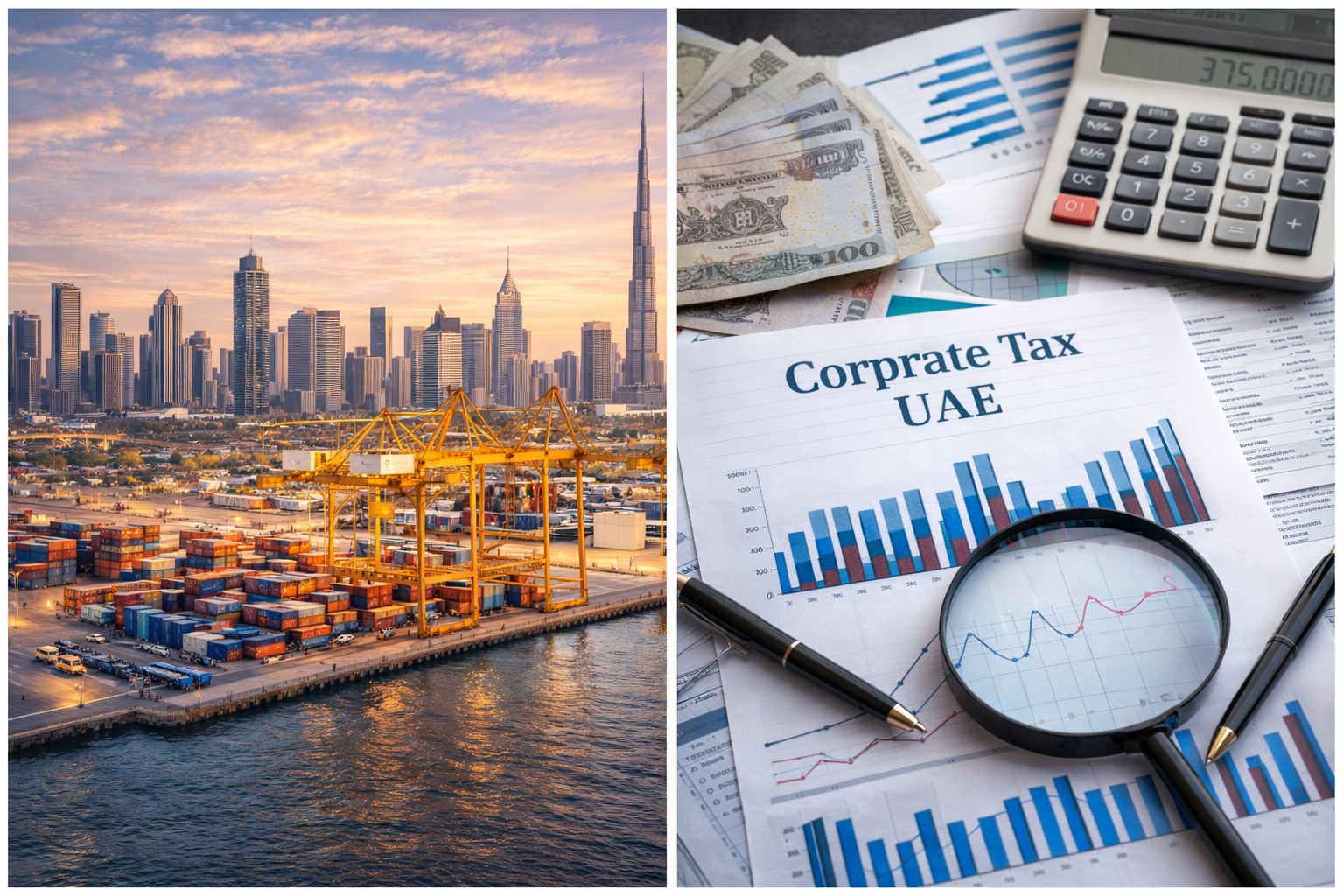
The United Arab Emirates continues to refine its tax framework to support a transparent and globally aligned financial environment. As international trade grows and regulatory standards evolve, the UAE has introduced updated tax guidelines that provide clarity for businesses involved in trading activities.
These updates help traders understand their responsibilities under the country’s tax system while maintaining the UAE’s reputation as a highly competitive and business-friendly destination. Dubai, as a leading global trading hub, offers strong regulatory support, advanced digital tax systems, and world-class logistics infrastructure that enable businesses to operate efficiently.
For companies engaged in import, export, and distribution, understanding the latest tax rules is essential for maintaining compliance and planning financial strategies effectively.
This article explains the key aspects of the new UAE tax rules relevant to traders.
The UAE has implemented a modern tax system designed to align with international financial standards while supporting economic growth. The primary components of this framework include corporate tax and Value Added Tax (VAT).
Businesses must maintain accurate financial records and comply with regulatory reporting requirements.
The tax framework ensures transparency and responsible financial management.
Companies operating in the UAE benefit from clear regulatory guidelines.
Under the corporate tax system, businesses engaged in trading activities may be subject to corporate tax on taxable profits exceeding the specified threshold. Traders must calculate taxable income based on financial records and accounting standards.
Proper financial reporting allows businesses to determine tax liabilities accurately.
Companies should ensure that accounting systems track revenue and expenses clearly.
This process supports compliance with corporate tax regulations.
VAT remains an important component of the UAE’s tax framework for traders. Businesses involved in selling goods and services must determine whether they meet the VAT registration threshold.
Registered businesses must charge VAT on taxable supplies and submit periodic VAT returns.
Accurate invoicing and financial documentation are essential.
VAT compliance supports transparent business operations.
Maintaining accurate financial records is a key requirement for traders operating in the UAE. Companies must document sales transactions, purchase invoices, and operational expenses.
These records support tax calculations and regulatory reporting.
Businesses should retain financial documents for the required compliance period.
Reliable documentation strengthens financial transparency.
Traders engaged in international commerce must understand how tax rules apply to import and export transactions. VAT treatment may vary depending on the nature of the transaction and the destination of goods.
Businesses should review tax implications related to cross-border trade.
Proper documentation helps ensure efficient customs processing.
Understanding these rules supports smooth international trade operations.
The UAE continues to expand digital platforms that allow businesses to manage tax obligations electronically. These systems enable traders to register for tax, submit returns, and track compliance through online portals.
Digital reporting simplifies administrative processes.
Automation improves the accuracy of tax calculations.
Technology-driven systems strengthen regulatory efficiency.
Reliable accounting systems are essential for traders managing complex financial transactions. Modern accounting software helps businesses track sales, purchases, inventory, and tax obligations.
Automated systems reduce manual errors and improve efficiency.
Businesses can generate financial reports quickly.
Accurate accounting supports regulatory compliance.
Many trading companies work with professional tax advisors to ensure compliance with evolving regulations. Advisors provide guidance on financial reporting, tax calculations, and regulatory updates.
Professional support helps businesses interpret new tax rules effectively.
Advisors can also assist with compliance reviews and financial planning.
This expertise strengthens financial management.
The updated tax rules provide greater clarity for traders operating in the UAE. Businesses can plan financial strategies with confidence while ensuring compliance with regulatory requirements.
Dubai’s strong financial ecosystem supports international trade operations.
Traders benefit from efficient regulatory systems and global connectivity.
This environment encourages continued business growth.
The UAE will continue refining its tax framework as part of its commitment to international financial standards and economic development. Businesses that maintain strong compliance systems will remain well positioned for future regulatory updates.
Dubai will continue to attract global trading companies seeking access to international markets.
Companies that adopt efficient financial management practices can adapt to regulatory developments smoothly.
The UAE’s supportive business environment ensures long-term growth opportunities.
The introduction of new tax rules for traders in the UAE reflects the country’s commitment to maintaining a transparent and globally aligned financial framework. By understanding corporate tax obligations, VAT requirements, and documentation standards, trading businesses can ensure smooth compliance with regulatory guidelines.
Dubai’s advanced infrastructure and supportive business ecosystem continue to make it an ideal destination for international trading companies.
Businesses that stay informed about regulatory developments and implement strong financial management systems will be well positioned for continued success.
As the UAE’s economy continues to evolve, traders can benefit from a stable environment that supports global commerce and economic growth.
Value Added Tax (VAT) continues to be an important part of the United Arab Emirates’…
The global tax landscape has undergone significant changes in recent years as governments work together…
Dubai has established itself as one of the world’s most dynamic trade and logistics hubs.…