March 18, 2026
Trade Opportunities in GCC Markets
The Gulf Cooperation Council (GCC) region has emerged as one of the most dynamic and…
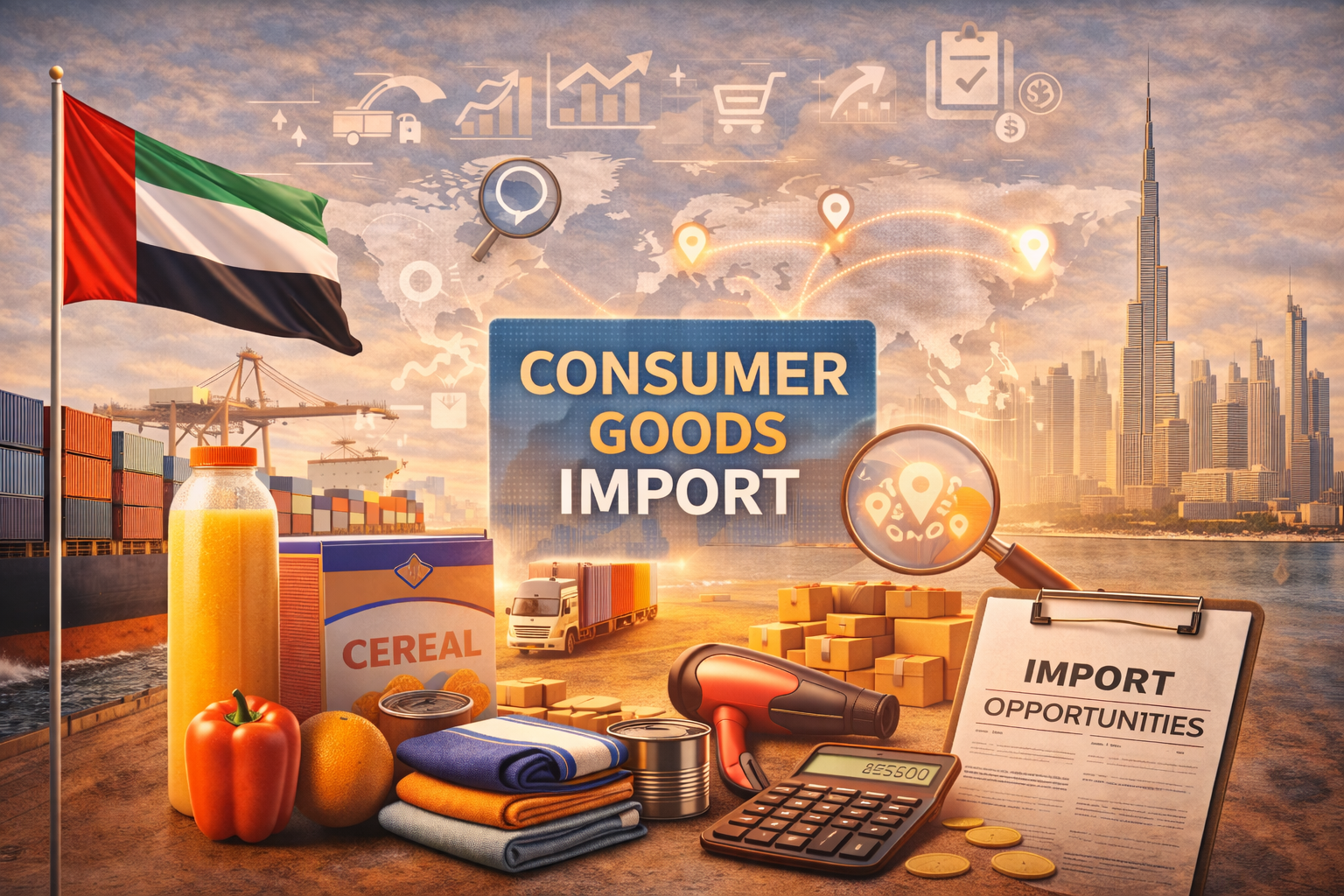
The global consumer goods market continues to expand as demand for everyday products grows across emerging and established economies. With increasing urbanization, rising incomes, and evolving consumer preferences, international trade in consumer goods has become one of the most dynamic segments of global commerce.
Dubai and the United Arab Emirates play a central role in facilitating the import and distribution of consumer goods across the Middle East, Africa, and South Asia. The region’s advanced logistics infrastructure, efficient customs systems, and strong global trade connections make it an ideal hub for businesses involved in consumer product imports.
Importers operating in Dubai benefit from world-class ports, airports, and distribution networks that enable efficient access to regional markets. These advantages allow businesses to bring products from international manufacturers and supply them to retailers, wholesalers, and e-commerce platforms across multiple countries.
This article explores the growing opportunities for importing consumer goods, the sectors experiencing strong demand, and how traders can leverage Dubai’s trade ecosystem to expand their businesses.
Consumer goods include a wide range of everyday products used by individuals and households. These products range from electronics and home appliances to food items, personal care products, clothing, and household essentials.
Population growth, urban development, and lifestyle changes are driving increased demand for consumer goods in many regions. Expanding middle-class populations are seeking high-quality products, international brands, and innovative solutions that improve daily living.
Retailers and distributors are continuously sourcing new products to meet evolving consumer expectations.
This demand creates valuable opportunities for importers who can connect global manufacturers with local markets.
Dubai serves as a major gateway for consumer goods entering regional markets. The city’s strategic geographic location allows businesses to distribute products efficiently across the Middle East, Africa, and South Asia.
Companies import goods into Dubai and then distribute them through regional supply chains to various markets.
The emirate’s logistics ecosystem includes modern ports, cargo airports, and advanced warehousing facilities that support large-scale distribution activities.
This infrastructure enables importers to manage inventory and shipments efficiently.
Several consumer goods categories present strong opportunities for importers. Electronics and smart devices remain among the most popular product segments.
Demand for mobile phones, home appliances, and smart home technologies continues to grow across regional markets.
Fashion and apparel products are another major category, driven by increasing interest in global brands and modern retail trends.
Personal care and beauty products also represent a growing market as consumers seek high-quality skincare and wellness items.
Food and beverage products are an essential segment of consumer goods imports. Many countries rely on imported food items to meet domestic demand and provide diverse product choices for consumers.
Import opportunities exist in categories such as packaged foods, beverages, specialty ingredients, and international cuisine products.
Retail supermarkets, restaurants, and hospitality businesses rely on reliable supply chains for food imports.
Efficient logistics and proper regulatory compliance are essential for managing food product imports.
The rapid expansion of e-commerce has significantly increased demand for imported consumer goods. Online retail platforms allow customers to access international products quickly and conveniently.
E-commerce companies often import products in bulk and store them in fulfillment centers before delivering them to customers.
Dubai’s advanced logistics and warehousing infrastructure supports fast order processing and efficient last-mile delivery.
This digital retail ecosystem creates new opportunities for consumer goods importers.
Efficient logistics operations are essential for successful consumer goods imports. Importers must coordinate transportation, customs clearance, warehousing, and distribution activities.
Dubai’s integrated logistics network allows goods to move smoothly between ports, warehouses, and retail markets.
Reliable freight forwarding services ensure that shipments arrive on time and in optimal condition.
Strong supply chain management improves product availability and customer satisfaction.
Dubai’s free zones support international trade by providing specialized environments for import and distribution businesses.
Companies operating in these zones benefit from efficient licensing processes, advanced infrastructure, and convenient access to logistics services.
Many consumer goods traders establish regional distribution centers within free zones.
This setup allows businesses to import products, store inventory, and distribute goods across regional markets efficiently.
Successful importers closely monitor consumer trends and preferences when selecting products for regional markets.
Market research helps businesses identify emerging product categories and understand customer expectations.
Factors such as product quality, brand reputation, pricing, and packaging influence purchasing decisions.
Importers who adapt their product offerings to local preferences can build strong relationships with retailers and consumers.
Importers must comply with regulatory standards and documentation requirements when bringing consumer goods into Dubai.
Customs authorities require accurate shipment documentation, including commercial invoices, packing lists, and certificates of origin.
Some product categories may also require safety certifications or quality approvals.
Following regulatory guidelines ensures smooth customs clearance and efficient product distribution.
Developing strong partnerships with international suppliers is essential for consumer goods importers. Reliable suppliers ensure consistent product quality and dependable shipment schedules.
Long-term partnerships allow businesses to negotiate favorable pricing and secure priority production capacity.
Effective communication between suppliers and importers supports efficient supply chain coordination.
Strong supplier relationships contribute to long-term business success.
The future of consumer goods imports remains highly promising as global trade continues to expand. Rapid urbanization, technological innovation, and changing consumer lifestyles will continue to drive demand for diverse products.
Dubai’s strategic role in international trade ensures that the emirate will remain a key gateway for consumer goods entering regional markets.
Businesses that leverage advanced logistics infrastructure and strong global partnerships can successfully capitalize on these opportunities.
Importers who adapt to evolving consumer trends and digital retail growth will be well positioned for long-term success.
Import opportunities in consumer goods continue to expand as global demand for everyday products grows across multiple regions. Businesses that connect international manufacturers with local markets play an important role in meeting consumer needs.
Dubai provides an ideal environment for consumer goods importers thanks to its strategic location, advanced logistics infrastructure, and strong global trade connectivity.
By leveraging efficient supply chains, reliable supplier partnerships, and a deep understanding of consumer trends, importers can successfully grow their businesses.
As international trade continues to evolve, Dubai will remain a leading gateway for consumer goods distribution across regional and global markets.
The Gulf Cooperation Council (GCC) region has emerged as one of the most dynamic and…

The United Arab Emirates continues to strengthen its position as one of the world’s leading…
The United Arab Emirates has established itself as one of the most influential global trading…