February 11, 2026
Expanding GCC-Asia Trade Routes
Trade between the Gulf Cooperation Council (GCC) countries and Asia has grown significantly in recent…
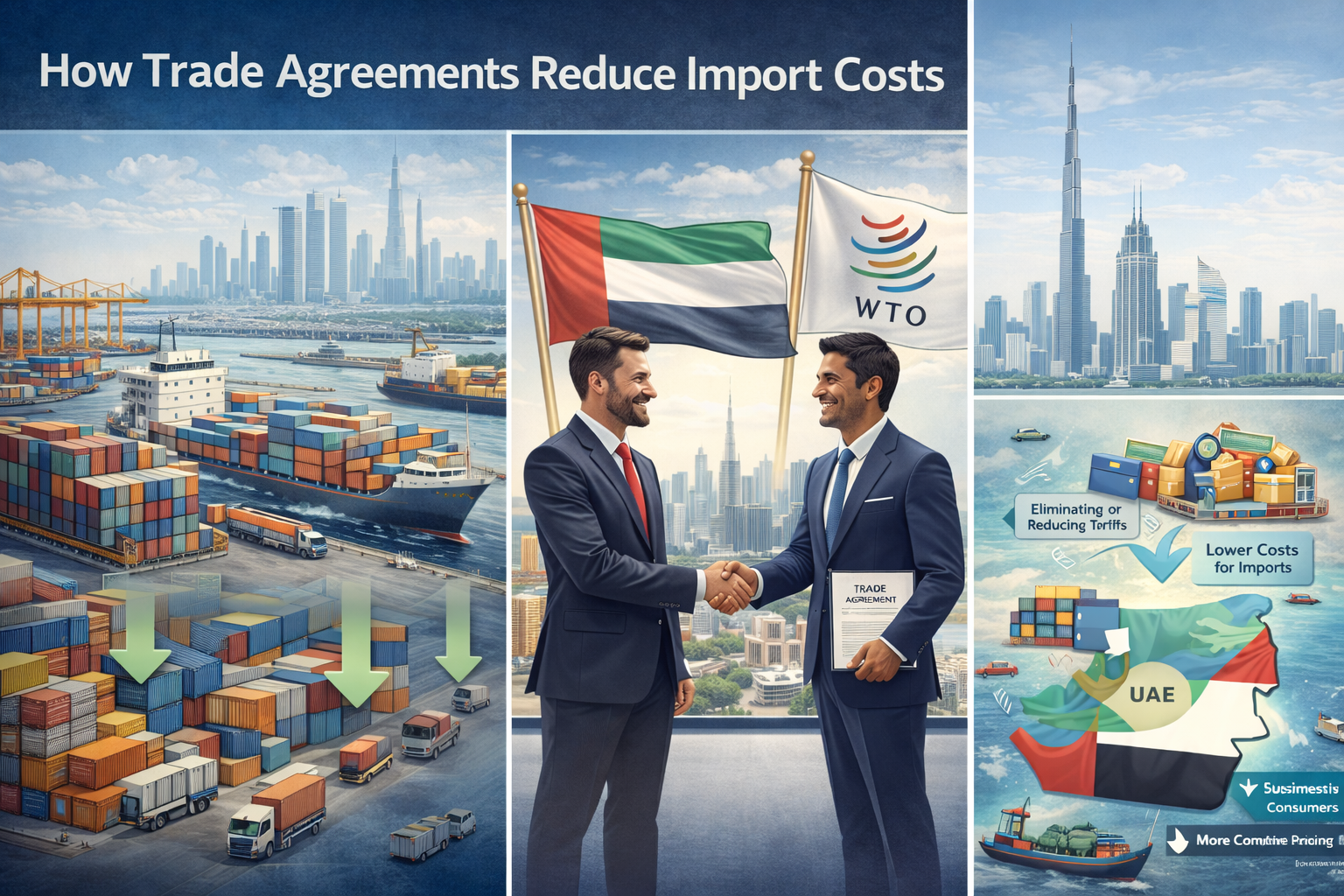
International trade agreements play a crucial role in reducing import costs and improving global trade efficiency. For businesses operating in Dubai and across the United Arab Emirates, these agreements provide significant advantages by lowering tariffs, simplifying customs procedures, and strengthening economic partnerships.
Dubai’s strategic position as a global trade hub allows companies to benefit from these agreements when importing goods from international markets. With modern logistics infrastructure, advanced ports, and efficient trade systems, the emirate provides businesses with an ideal platform for international commerce.
Understanding how trade agreements work and how they reduce import costs can help companies optimize their supply chains and expand their trading operations.
Trade agreements are formal arrangements between two or more countries that establish rules governing international trade. These agreements are designed to promote economic cooperation, facilitate trade flows, and reduce barriers that restrict commerce between participating nations.
Trade agreements often focus on reducing tariffs, improving regulatory transparency, and creating fair market access for businesses.
For companies importing goods into Dubai, these agreements can significantly lower operational costs and increase trade efficiency.
One of the most important benefits of trade agreements is the reduction or elimination of import tariffs. Tariffs are taxes imposed on goods entering a country, and they can significantly increase the cost of imported products.
When countries sign trade agreements, they often agree to reduce tariffs on specific goods or eliminate them entirely. This reduction allows businesses to import products at lower costs.
Lower tariffs enable companies to offer competitive pricing while maintaining healthy profit margins.
Trade agreements also promote more efficient customs procedures between participating countries. Governments work together to standardize documentation requirements and streamline border inspections.
These improvements reduce administrative delays and help businesses move goods more quickly across international borders.
Dubai’s advanced digital customs systems complement these agreements by enabling faster cargo clearance and improved trade transparency.
Reduced trade barriers allow companies to manage supply chains more efficiently. Businesses can source materials, equipment, and products from international suppliers without facing excessive duties or complex regulations.
Dubai’s logistics infrastructure supports this process by providing efficient shipping routes, warehousing facilities, and regional distribution networks.
This efficiency allows businesses to respond quickly to market demand and maintain reliable inventory levels.
Trade agreements create stronger connections between global markets. Businesses operating in Dubai can import goods from multiple countries while benefiting from favorable trade conditions.
These agreements also encourage foreign investment and international business partnerships.
Dubai’s global connectivity makes it easier for companies to leverage these trade relationships when expanding their operations.
Dubai is known for its strong re-export trade sector. Many goods imported into the emirate are redistributed to markets across the Middle East, Africa, and South Asia.
Trade agreements support this model by reducing the cost of imported products that are later exported to other markets.
This advantage strengthens Dubai’s role as a major global distribution center.
Modern trade agreements increasingly support the use of digital technologies in global commerce. Electronic documentation systems, online trade platforms, and automated logistics solutions help businesses manage international transactions more efficiently.
Dubai continues to invest in digital trade infrastructure that simplifies cross-border trade procedures.
These innovations further enhance the benefits of international trade agreements.
As international trade continues to evolve, countries are expected to develop new agreements that strengthen economic cooperation and support global commerce.
Dubai’s leadership in logistics, finance, and digital trade solutions ensures that businesses operating in the emirate will continue to benefit from these developments.
Companies that understand the advantages of trade agreements can position themselves for long-term success in global markets.
Trade agreements play an important role in reducing import costs and improving the efficiency of global commerce. By lowering tariffs, simplifying customs procedures, and encouraging international cooperation, these agreements create valuable opportunities for businesses.
Dubai’s strategic location, advanced logistics infrastructure, and strong trade relationships make it an ideal hub for companies involved in international imports and distribution.
As global trade partnerships continue to expand, businesses operating in Dubai will remain well positioned to benefit from reduced import costs and growing international markets.
Trade between the Gulf Cooperation Council (GCC) countries and Asia has grown significantly in recent…
The economic relationship between the United Arab Emirates and Vietnam has grown steadily over the…

The United Arab Emirates continues to expand its global trade network through new economic and…