March 25, 2026
Future Outlook for UAE Goods Trading
The United Arab Emirates has firmly established itself as one of the world’s most influential…
Dubai has firmly established itself as one of the world’s most important trade gateways connecting Asia and Europe. With its strategic geographic location, advanced logistics infrastructure, and strong international partnerships, the emirate plays a vital role in facilitating the movement of goods between two of the largest economic regions in the world.
Businesses operating in Dubai benefit from world-class ports, global aviation networks, modern logistics zones, and digital trade systems that enable efficient cross-border commerce. These advantages allow companies to move goods quickly and reliably across international supply chains.
As global trade continues to expand, Dubai’s role as a bridge between Asia and Europe has become even more significant. The city provides an ideal base for multinational companies, trading firms, and logistics providers managing international distribution networks.
This article explores how Dubai has become a key gateway for Asia-Europe trade and highlights the factors that continue to strengthen its global trade leadership.
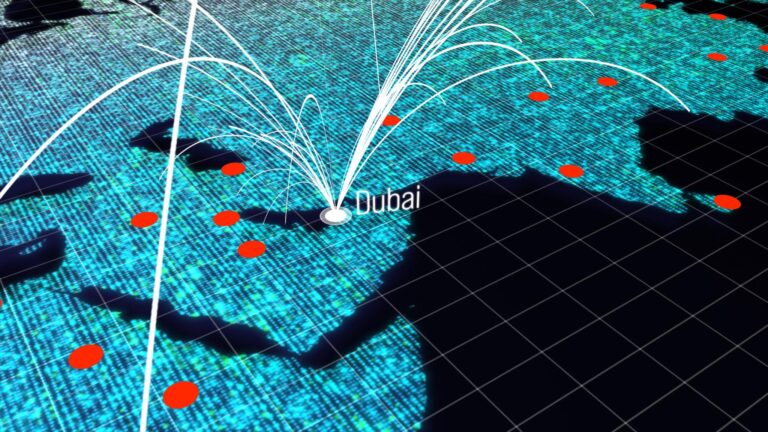
Dubai’s geographic location places it at the crossroads of major global trade routes. Positioned between Asia, Europe, and Africa, the emirate offers direct access to multiple international markets.
From Dubai, goods can reach large consumer markets within relatively short transit times.
This strategic advantage allows companies to establish regional distribution centers and manage trade flows between continents.
Dubai’s connectivity makes it an essential hub for global supply chains.
Dubai’s maritime infrastructure plays a crucial role in facilitating trade between Asia and Europe. The emirate’s ports support some of the busiest shipping routes in the world.
Jebel Ali Port, one of the largest container ports globally, handles large volumes of international cargo.
The port connects shipping routes across Asia, Europe, and other regions.
Its integration with nearby logistics zones allows businesses to manage cargo handling and distribution efficiently.
Air cargo plays a major role in connecting Asian and European markets through Dubai. The emirate operates major international airports that support high volumes of cargo traffic.
Dubai International Airport and Al Maktoum International Airport provide extensive air freight connections to major global cities.
Air cargo services are particularly important for time-sensitive shipments such as electronics, pharmaceuticals, and luxury goods.
These aviation networks strengthen Dubai’s role as a global logistics hub.
Dubai’s free zones provide an ideal environment for companies engaged in international trade. These zones offer modern infrastructure, efficient regulatory systems, and proximity to logistics facilities.
Many multinational corporations establish regional headquarters in Dubai’s free zones to manage operations across Asia, Europe, and the Middle East.
Free zones also provide access to warehouses, distribution centers, and logistics services.
This ecosystem supports efficient global trade operations.
Re-export trade is a key component of Dubai’s global trade strategy. Businesses import goods into the emirate and redistribute them to other markets without major transformation.
This model allows companies to serve customers across multiple regions from a centralized hub.
Products from Asian manufacturing centers are often distributed through Dubai to European and Middle Eastern markets.
The re-export system strengthens Dubai’s role in global supply chains.
Dubai has developed advanced logistics systems that support efficient cargo handling and distribution. Modern warehouses, distribution centers, and transportation networks enable businesses to manage supply chains seamlessly.
Logistics companies operating in Dubai provide services such as freight forwarding, inventory management, and customs coordination.
These services ensure that goods move efficiently across international markets.
The integrated logistics ecosystem supports high-volume trade operations.
Technology is playing an increasingly important role in Dubai’s trade operations. Digital trade platforms allow businesses to manage documentation, customs procedures, and logistics coordination electronically.
Electronic documentation systems reduce administrative complexity and improve efficiency.
Businesses can track shipments and manage supply chain activities in real time.
Digital innovation continues to strengthen Dubai’s position as a modern trade hub.
Dubai maintains strong economic partnerships with countries across Asia and Europe. These relationships encourage international trade, investment, and business collaboration.
Trade partnerships support the exchange of goods, services, and technology.
Businesses operating in Dubai benefit from improved access to global markets.
These partnerships contribute to the emirate’s expanding international trade network.
The growth of e-commerce has further strengthened Dubai’s role as a gateway for international trade. Online retailers use regional fulfillment centers in Dubai to distribute products across global markets.
The city’s logistics infrastructure supports fast order processing and efficient delivery networks.
E-commerce companies benefit from centralized inventory management and international shipping capabilities.
This trend is creating new opportunities for cross-border digital commerce.
The future of trade between Asia and Europe remains highly promising as global commerce continues to expand. Emerging markets and technological innovation will drive new opportunities for international trade.
Dubai’s continued investment in infrastructure, logistics technology, and global partnerships will further strengthen its role in connecting these regions.
The emirate’s strategic position and modern trade ecosystem ensure strong connectivity between continents.
Businesses operating in Dubai will continue to benefit from efficient access to global markets.
Dubai has successfully positioned itself as a key gateway connecting Asia and Europe through advanced logistics infrastructure, strong global partnerships, and innovative trade systems.
The emirate’s strategic geographic location allows businesses to manage international supply chains efficiently and access multiple markets from a single hub.
With continued investment in infrastructure and digital trade platforms, Dubai will remain a central player in global commerce.
As international trade grows, the city will continue to serve as a powerful bridge linking Asia and Europe in the global economy.
The United Arab Emirates has firmly established itself as one of the world’s most influential…
Dubai has established itself as one of the most influential trade centers in the world,…
The United Arab Emirates has achieved a historic milestone as its non-oil trade surpasses the…