March 18, 2026
Trade Opportunities in GCC Markets
The Gulf Cooperation Council (GCC) region has emerged as one of the most dynamic and…
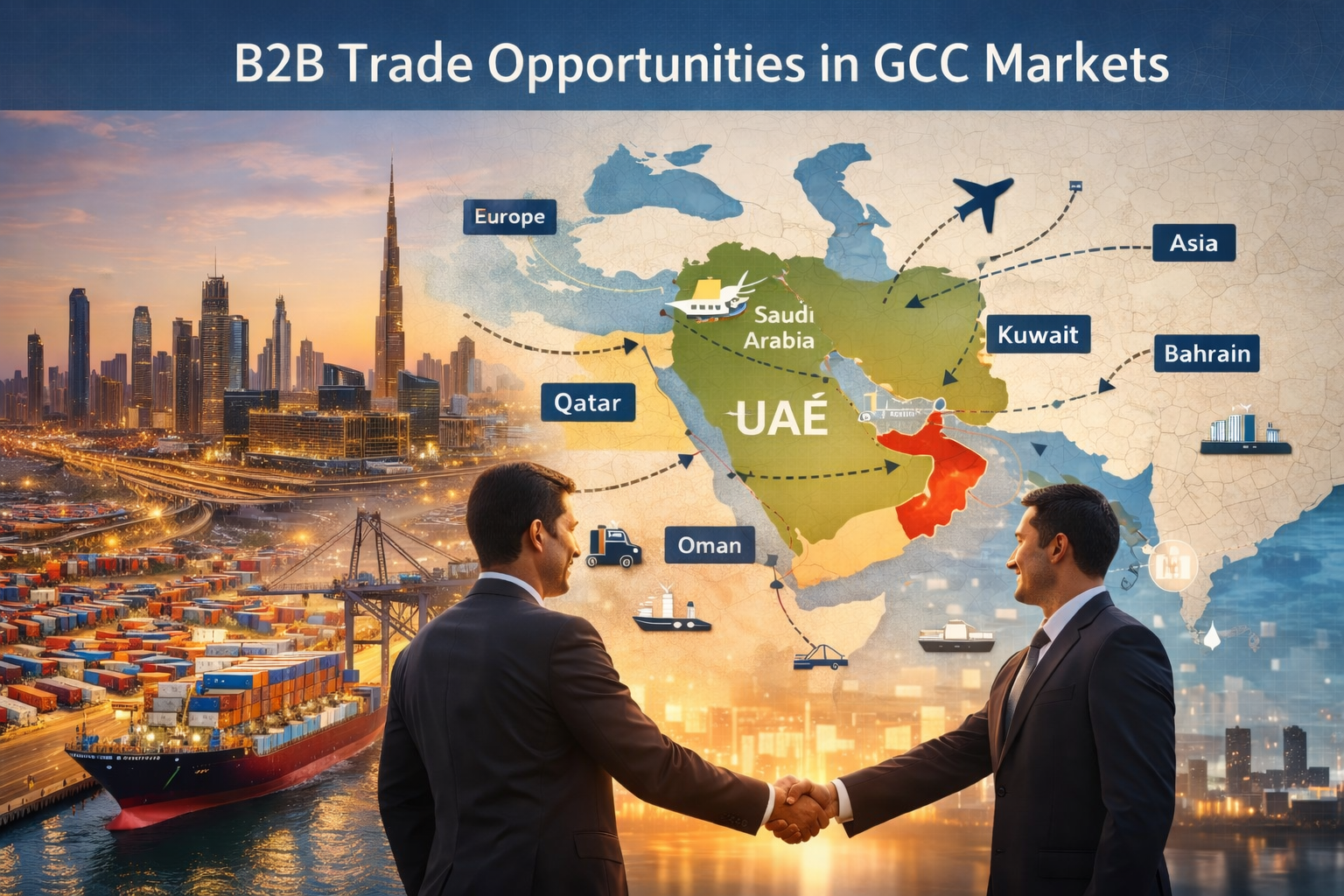
The Gulf Cooperation Council (GCC) region has become one of the most dynamic business environments for international trade. With strong economic growth, large infrastructure investments, and increasing regional cooperation, the GCC provides excellent opportunities for businesses engaged in B2B trade.
Dubai plays a central role in facilitating these trade connections. As a global logistics hub with advanced ports, airports, and free zones, Dubai enables companies to distribute goods efficiently across GCC countries including Saudi Arabia, the United Arab Emirates, Qatar, Kuwait, Bahrain, and Oman.
For businesses seeking to expand into the Middle East, understanding B2B trade opportunities within the GCC region is essential for identifying growth potential and building strong commercial partnerships.
The GCC economies have experienced strong growth driven by infrastructure development, industrial expansion, and rising consumer demand. Governments across the region are investing heavily in economic diversification initiatives that support manufacturing, logistics, and technology sectors.
This economic expansion is creating strong demand for international suppliers and B2B partnerships across multiple industries.
Dubai’s strategic location allows businesses to access these opportunities while operating from a globally connected trade hub.
Several industries present strong B2B trade opportunities within GCC markets. Businesses involved in these sectors can benefit from expanding demand across the region.
These sectors support large-scale projects and economic growth initiatives throughout the Gulf region.
Many companies choose Dubai as their base for GCC trade operations. The city provides efficient logistics networks that allow businesses to import goods and distribute them quickly across neighboring markets.
Facilities such as Jebel Ali Port and Dubai’s logistics parks support high-volume cargo movement and regional distribution.
This infrastructure allows companies to manage supply chains efficiently while expanding B2B operations throughout the Gulf.
Dubai’s free zones provide an ideal environment for companies involved in regional trade. Businesses operating within these zones benefit from modern infrastructure and streamlined regulatory procedures.
Major free zones supporting B2B trading companies include:
These zones attract international companies managing regional distribution networks.
Technology is transforming B2B trade across the GCC. Digital marketplaces and trade platforms allow businesses to connect with suppliers, distributors, and partners across the region.
Companies can now manage procurement, logistics, and supply chain operations through digital tools that improve efficiency and transparency.
Dubai’s focus on digital transformation continues to support innovation in B2B commerce.
Successful B2B trade in GCC markets often depends on strong partnerships and local business networks. Companies entering the region benefit from collaborating with distributors, logistics providers, and local trading firms.
These partnerships help businesses navigate regional markets and establish long-term commercial relationships.
Dubai’s international business environment makes it an ideal location for building such partnerships.
The GCC region is expected to remain one of the fastest-growing trade markets in the Middle East. Continued infrastructure development, industrial diversification, and cross-border trade initiatives will support increasing B2B activity.
Dubai’s advanced logistics systems and global connectivity ensure that it will continue to serve as a gateway for companies seeking access to GCC markets.
Businesses that leverage Dubai’s strategic advantages can successfully expand their presence across the Gulf region.
B2B trade opportunities in GCC markets continue to expand as the region invests in infrastructure, technology, and economic diversification. Companies operating from Dubai benefit from strong logistics connectivity and access to regional business networks.
By focusing on high-growth sectors and building strategic partnerships, businesses can successfully participate in the growing GCC trade ecosystem.
With its global connectivity and pro-business environment, Dubai remains a powerful gateway for companies seeking to expand B2B trade throughout the Gulf region.
The Gulf Cooperation Council (GCC) region has emerged as one of the most dynamic and…

The United Arab Emirates continues to strengthen its position as one of the world’s leading…
The United Arab Emirates has established itself as one of the most influential global trading…