
December 17, 2025
Preparing for Tax Changes in 2026
As the global tax environment continues to evolve, businesses operating in the United Arab Emirates…

Tax policies play a crucial role in shaping international trade and economic development. Well-designed tax frameworks encourage business growth, attract foreign investment, and support the smooth movement of goods and services across borders. Governments around the world use strategic tax policies to create favorable environments for global commerce.
The United Arab Emirates has developed a modern and transparent tax system that supports international trade while maintaining a highly competitive business environment. Through efficient regulatory frameworks, advanced infrastructure, and global trade connectivity, the UAE continues to strengthen its position as a leading hub for global commerce.
Dubai plays a key role in supporting these policies by offering world-class logistics infrastructure, free zones, and advanced digital trade systems that allow businesses to operate efficiently in international markets.
This article explores how tax policies support international trade and contribute to economic growth.
Effective tax policies create an environment that encourages businesses to invest and expand operations. Competitive tax structures attract international companies seeking stable and transparent regulatory systems.
Investors are more likely to establish operations in countries that offer predictable tax frameworks.
This investment supports job creation and economic development.
Strong investment flows also enhance global trade networks.
Tax policies influence the cost structure of international trade operations. Efficient tax frameworks help reduce the financial burden associated with import and export activities.
Lower trade-related costs allow businesses to price products more competitively in global markets.
Companies can expand export operations and explore new international opportunities.
This encourages greater participation in global commerce.
Free zones are a key element of many countries’ trade strategies, and tax policies often support the development of these specialized economic areas. In the UAE, free zones provide businesses with modern infrastructure and efficient regulatory systems.
Companies operating in free zones benefit from structured tax frameworks designed to support international trade.
These zones enable businesses to manage import, export, and re-export operations efficiently.
Free zones strengthen global supply chain connectivity.
Tax policies can support export-oriented industries by creating favorable financial conditions for businesses. Governments may implement policies that encourage companies to expand production and enter international markets.
Export growth allows businesses to diversify revenue streams.
Companies can reach new customers and develop global partnerships.
This growth contributes to national economic development.
Foreign direct investment plays a key role in expanding global trade networks. Tax policies that promote investment encourage international companies to establish regional headquarters, logistics hubs, and manufacturing facilities.
Investors benefit from stable financial frameworks and clear regulatory guidelines.
These investments support infrastructure development and industrial growth.
Stronger investment flows contribute to international trade expansion.
Efficient tax systems help businesses manage international supply chains more effectively. Transparent regulations allow companies to plan financial strategies and manage cross-border transactions with confidence.
Businesses can optimize logistics operations and manage global distribution networks.
Predictable tax frameworks support long-term planning.
Efficient supply chains strengthen global trade operations.
Tax policies often encourage innovation by supporting technology development and research initiatives. Businesses investing in innovation can improve productivity and create advanced solutions for global markets.
Technology-driven industries contribute significantly to international trade.
Innovation enhances competitiveness and operational efficiency.
These developments support long-term economic growth.
Modern tax frameworks promote transparency and accountability in financial reporting. Businesses must maintain accurate financial records and comply with regulatory requirements.
Transparent financial systems build trust with investors, financial institutions, and international partners.
Clear reporting standards strengthen the credibility of business operations.
Transparency supports a stable trade environment.
Digital technologies are transforming international trade and taxation systems. Governments are increasingly adopting electronic documentation platforms and digital reporting tools.
These systems allow businesses to manage tax compliance and trade documentation more efficiently.
Automation improves data accuracy and reduces administrative processes.
Digital trade systems support faster global commerce.
Dubai plays a central role in implementing trade-supportive tax policies through its advanced business environment. The emirate’s logistics infrastructure, free zones, and financial systems allow businesses to operate efficiently.
Companies based in Dubai can manage global trade activities through integrated supply chain networks.
The city’s strong connectivity supports international commerce.
This environment encourages global companies to establish operations in the region.
As global commerce continues to evolve, governments will continue refining tax policies to support trade growth and economic diversification. Advances in digital reporting systems and international cooperation will further improve trade efficiency.
Businesses that understand and adapt to evolving tax frameworks will remain competitive in global markets.
The UAE’s commitment to innovation and economic development ensures a strong future for international trade.
Tax policies will continue to play an important role in supporting global commerce.
Tax policies are an essential component of modern trade systems, providing businesses with the financial and regulatory frameworks needed to operate efficiently in international markets. By encouraging investment, supporting exports, and promoting transparency, effective tax policies help create dynamic and competitive trade environments.
The UAE continues to demonstrate how strategic tax frameworks can support global trade and economic growth.
Dubai’s advanced infrastructure and business-friendly ecosystem further strengthen the effectiveness of these policies.
As global commerce expands, tax policies will remain a key driver of international business success and economic development.
As the global tax environment continues to evolve, businesses operating in the United Arab Emirates…
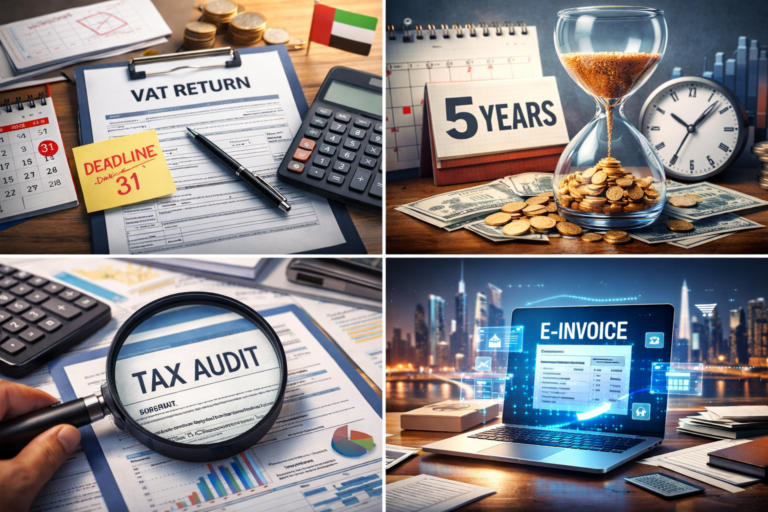
Value Added Tax (VAT) remains an important component of the United Arab Emirates’ modern tax…
The United Arab Emirates continues to enhance its regulatory framework to support a transparent and…