February 11, 2026
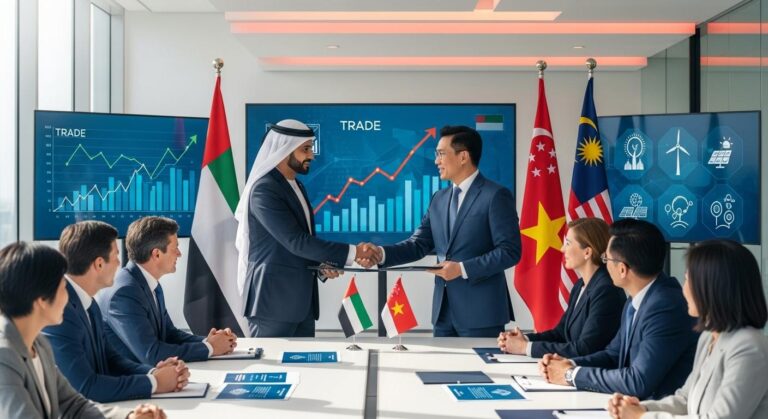
Expanding GCC-Asia Trade Routes
Trade between the Gulf Cooperation Council (GCC) countries and Asia has grown significantly in recent…
Trade agreements play a vital role in facilitating international commerce by reducing barriers that may otherwise limit the flow of goods, services, and investments between countries. By creating structured economic partnerships, these agreements help businesses operate more efficiently across global markets.
The United Arab Emirates has actively pursued international trade agreements as part of its strategy to strengthen global trade connectivity and support economic diversification. These agreements provide businesses with improved access to international markets while simplifying regulatory processes.
Dubai, as one of the world’s leading trade and logistics hubs, benefits significantly from these agreements. The city’s advanced ports, airports, and digital trade infrastructure enable businesses to move goods quickly across international supply chains.
This article explores how trade agreements reduce barriers and create opportunities for businesses involved in global commerce.
One of the most important benefits of trade agreements is the reduction or elimination of tariffs on imported and exported goods. Tariffs are taxes imposed on goods entering a country, which can increase the cost of products in international markets.
Trade agreements often reduce these taxes, allowing businesses to offer products at more competitive prices.
Lower tariffs encourage companies to expand export activities and reach new markets.
This process helps increase the volume of international trade.
Trade agreements often include provisions that simplify customs procedures and documentation requirements. These improvements reduce administrative delays and help goods move more efficiently across borders.
Streamlined customs systems allow businesses to manage international shipments more effectively.
Digital documentation and standardized processes improve trade efficiency.
Faster customs clearance supports global supply chains.
Trade agreements allow businesses to enter international markets that may have previously had strict regulatory restrictions. These agreements often reduce quotas and licensing requirements for specific industries.
Improved market access enables companies to expand their customer base and develop new business partnerships.
Businesses can introduce products and services to a wider range of international consumers.
This creates opportunities for global growth.
International trade agreements often include provisions that encourage foreign direct investment. Clear regulatory frameworks and stable economic relationships attract investors seeking opportunities in new markets.
Businesses are more likely to establish operations in countries where trade agreements provide predictable economic conditions.
Investment flows help strengthen global supply chains and industrial development.
These partnerships support long-term economic growth.
Trade agreements help businesses build more efficient global supply chains by reducing regulatory complexities between partner countries.
Companies can source raw materials, components, and finished products from international suppliers with fewer barriers.
Improved trade connectivity allows businesses to optimize production and distribution networks.
Strong supply chains support global commerce.
Trade agreements strengthen economic cooperation between participating countries. Governments collaborate to develop shared standards, improve regulatory frameworks, and support business development.
These partnerships encourage innovation and knowledge exchange between industries.
Companies benefit from improved business environments and stronger international relationships.
Economic cooperation contributes to sustainable growth.
Small and medium-sized enterprises benefit significantly from reduced trade barriers. Lower tariffs and simplified regulations make it easier for smaller companies to participate in international markets.
SMEs can export products, form partnerships with international distributors, and access new consumer markets.
Digital trade platforms further support cross-border business operations.
This inclusion strengthens global trade ecosystems.
Technology plays an important role in implementing modern trade agreements. Digital trade platforms allow businesses to manage customs documentation, shipping information, and regulatory compliance electronically.
Automation and data analytics improve efficiency across global supply chains.
Businesses can track shipments and manage logistics operations in real time.
Digital innovation supports faster trade processes.
Dubai’s advanced logistics infrastructure plays a key role in supporting international trade agreements. The emirate’s ports, airports, and logistics zones provide efficient connectivity between global markets.
Companies operating in Dubai can leverage these advantages to distribute goods across multiple regions.
The city’s business-friendly environment encourages international trade and investment.
This infrastructure strengthens the benefits created by trade agreements.
The role of trade agreements will continue to grow as global commerce becomes more interconnected. Countries are increasingly forming economic partnerships to strengthen trade relationships and improve market access.
Businesses that understand and leverage these agreements can expand their international presence.
The UAE’s commitment to global trade cooperation will continue to create new opportunities.
International trade agreements will remain a key driver of economic growth.
Trade agreements play a crucial role in reducing barriers and enabling businesses to operate efficiently in international markets. By lowering tariffs, simplifying customs procedures, and encouraging cross-border investment, these agreements strengthen global commerce.
The UAE’s proactive approach to international trade partnerships supports its position as a leading global trade hub.
Dubai’s advanced logistics infrastructure allows businesses to take full advantage of these agreements and expand their global reach.
As global trade continues to evolve, trade agreements will remain an essential tool for promoting economic cooperation and business growth.
Trade between the Gulf Cooperation Council (GCC) countries and Asia has grown significantly in recent…
The economic relationship between the United Arab Emirates and Vietnam has grown steadily over the…

The United Arab Emirates continues to expand its global trade network through new economic and…