October 8, 2025
Logistics and Supply Chain Opportunities
The logistics and supply chain sector has become one of the most important pillars of…
Dubai has established itself as one of the world’s most important logistics and trade centers, enabling businesses to build and manage global supply chains efficiently. With its strategic geographic location, advanced infrastructure, and strong international connectivity, the emirate provides companies with an ideal platform for international sourcing, distribution, and trade operations.
Businesses operating in Dubai benefit from world-class ports, global aviation networks, modern logistics facilities, and digital trade platforms. These advantages allow companies to move goods quickly across continents and manage complex supply chain operations from a central hub.
As global commerce continues to expand, many multinational corporations and trading firms are using Dubai as a base for managing regional and international supply networks. The city’s efficient logistics ecosystem supports businesses that import, export, and distribute goods to markets around the world.
This article explores how companies can build global supply chains from Dubai and leverage the city’s strengths to support international trade growth.
Dubai’s geographic position between Asia, Europe, and Africa makes it a natural gateway for global trade. From the emirate, businesses can reach major consumer markets within relatively short transit times.
This strategic location allows companies to establish regional distribution centers that serve multiple markets.
Global shipping and aviation routes passing through the region further enhance Dubai’s connectivity.
Businesses can manage international supply chains from a central and efficient location.
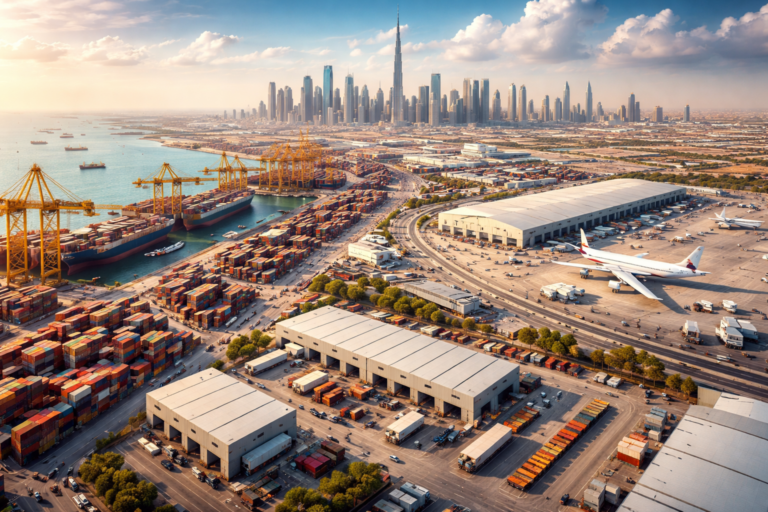
Dubai has developed one of the most advanced logistics infrastructures in the world. The emirate’s integrated network of ports, airports, highways, and logistics zones supports seamless cargo movement.
Facilities such as Jebel Ali Port handle large volumes of international shipping and connect global maritime routes.
Dubai’s cargo airports support rapid air freight operations for time-sensitive goods.
This infrastructure enables businesses to manage global distribution efficiently.
Free zones across Dubai provide ideal environments for companies managing international supply chains. These zones offer modern facilities, efficient regulatory frameworks, and proximity to logistics hubs.
Businesses operating in free zones can establish warehouses, distribution centers, and trading operations.
Many multinational companies use these zones as regional headquarters for managing global trade activities.
This ecosystem strengthens Dubai’s supply chain capabilities.
Dubai’s import and re-export model plays a key role in global supply chain management. Businesses can import products into the emirate and redistribute them to regional and international markets.
This approach allows companies to serve customers across the Middle East, Africa, and South Asia from a single logistics hub.
Re-export trade enables efficient inventory management and faster delivery times.
Dubai’s customs systems support smooth cargo movement.
Modern warehouses and distribution centers are essential components of global supply chains. Dubai offers advanced logistics parks equipped with storage facilities, automated inventory systems, and cargo handling services.
Businesses can store goods close to transportation hubs and distribute products quickly to international markets.
Efficient warehousing improves order fulfillment and inventory control.
These facilities support large-scale supply chain operations.
Technology is transforming how global supply chains operate. Businesses in Dubai are increasingly using digital platforms, automation systems, and data analytics to manage logistics operations.
Real-time shipment tracking allows companies to monitor cargo movement across transportation networks.
Supply chain management software helps optimize inventory levels and distribution schedules.
Technology-driven systems improve operational efficiency.
Dubai’s strong global connectivity allows businesses to establish partnerships with suppliers, manufacturers, and distributors across multiple regions.
Companies operating in the emirate can build international supply networks that span continents.
This access allows businesses to source products from global manufacturing centers and distribute them to diverse markets.
Global trade networks strengthen supply chain resilience.
The rapid growth of e-commerce has increased the importance of efficient logistics systems. Dubai’s supply chain infrastructure supports cross-border e-commerce operations.
Online retailers often establish fulfillment centers in Dubai to serve regional markets.
Advanced logistics networks enable quick order processing and reliable delivery.
This capability supports digital commerce expansion.
Companies building global supply chains must consider risk management and operational resilience. Diversifying suppliers, transportation routes, and distribution centers helps businesses maintain stable operations.
Dubai’s logistics ecosystem allows companies to manage multiple supply channels effectively.
Strong infrastructure and global connectivity reduce operational risks.
Resilient supply chains support long-term business growth.
International companies benefit significantly from establishing supply chain operations in Dubai. The emirate provides access to global markets, advanced logistics systems, and a supportive business environment.
Businesses can manage procurement, warehousing, and distribution activities from a centralized location.
This operational efficiency supports global expansion strategies.
Dubai continues to attract multinational corporations and trading firms.
The future of global supply chains will continue to evolve with advancements in logistics technology, automation, and digital trade platforms. Dubai is actively investing in smart logistics systems and infrastructure development.
These investments will further enhance the emirate’s ability to support large-scale international trade operations.
Businesses that leverage Dubai’s supply chain ecosystem will remain competitive in global markets.
The city will continue to play a central role in connecting international supply networks.
Dubai has become one of the most strategic locations for building global supply chains. Through its advanced logistics infrastructure, strong international connectivity, and supportive business environment, the emirate enables companies to manage international trade efficiently.
Businesses operating in Dubai can access global markets, optimize supply chain operations, and build resilient distribution networks.
As global trade continues to expand, Dubai will remain a leading hub for international logistics and supply chain management.
Companies that leverage the emirate’s advantages will be well positioned for sustained growth in the global marketplace.
The logistics and supply chain sector has become one of the most important pillars of…
Dubai continues to strengthen its position as one of the world’s leading logistics and trade…
In today’s interconnected global economy, supply chains play a crucial role in supporting international trade…