February 11, 2026
Expanding GCC-Asia Trade Routes
Trade between the Gulf Cooperation Council (GCC) countries and Asia has grown significantly in recent…
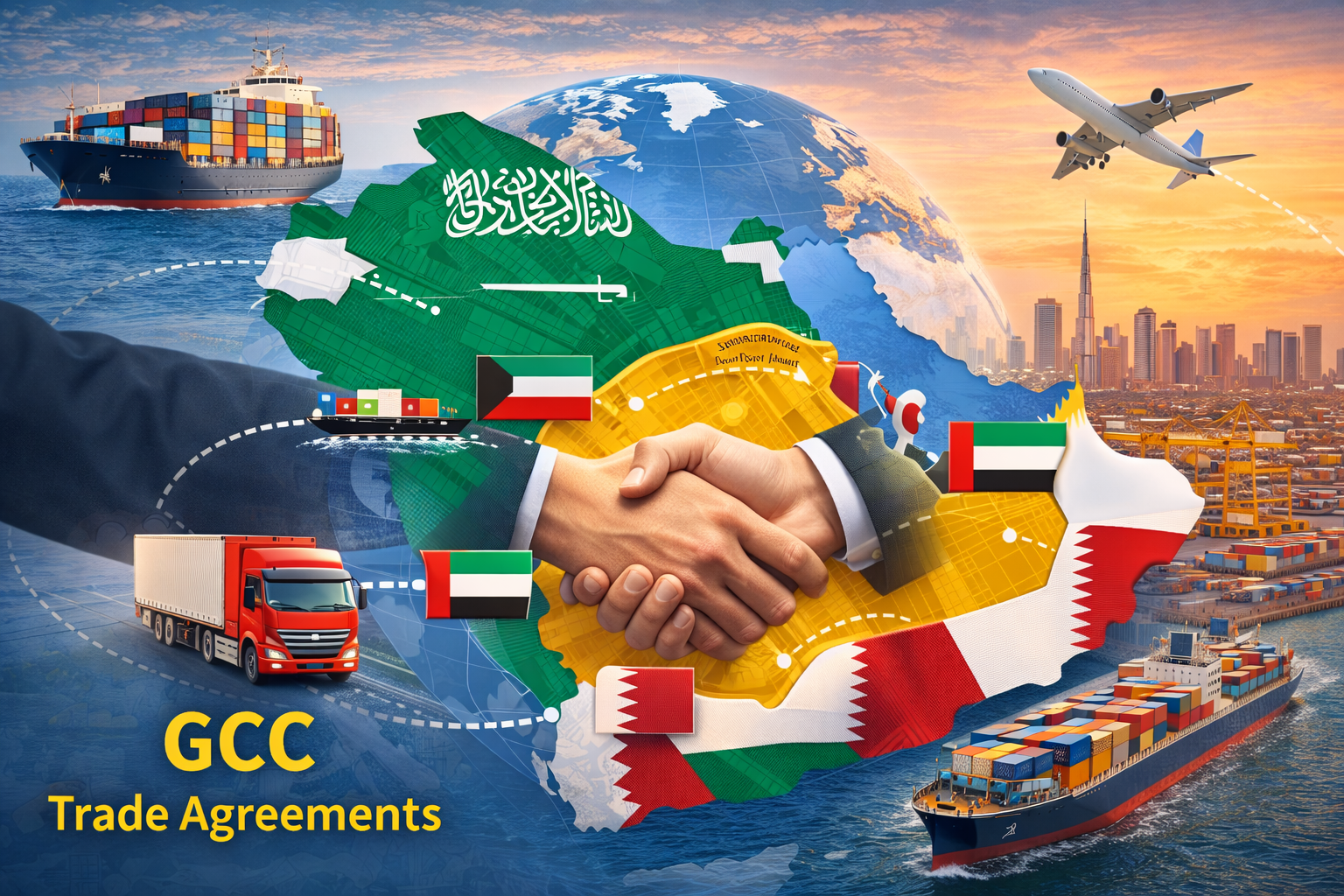
The Gulf Cooperation Council (GCC) plays a significant role in shaping trade and economic cooperation across the Middle East. Comprising six member states — the United Arab Emirates, Saudi Arabia, Qatar, Kuwait, Bahrain, and Oman — the GCC has developed a framework of trade agreements designed to strengthen regional integration and promote international commerce.
Through coordinated economic policies, shared customs regulations, and free trade agreements with global partners, the GCC has created a dynamic environment that supports international trade and investment. Dubai, as one of the region’s leading commercial hubs, benefits greatly from these agreements by serving as a gateway for goods moving between global markets and the Gulf region.
Understanding GCC trade agreements is essential for businesses seeking to import, export, or distribute products across the Gulf region. These agreements simplify trade procedures, reduce tariffs, and encourage economic collaboration between member countries and international partners.
The GCC was established in 1981 to strengthen political and economic cooperation among Gulf states. One of the council’s key objectives is to create an integrated economic market that facilitates trade and investment within the region.
The six GCC member countries include:
Together, these countries represent a major economic bloc with strong trade connections to global markets.
One of the most important initiatives introduced by the GCC is the Customs Union, which was implemented to simplify trade among member states. Under this system, goods imported into any GCC country can move freely between member states once customs duties are paid at the first point of entry.
Key features of the GCC Customs Union include:
This system enhances the efficiency of regional trade and supports supply chain integration across GCC markets.
The GCC Common Market initiative was launched to further strengthen economic cooperation among member states. The objective of the common market is to provide equal economic opportunities for citizens and businesses within GCC countries.
This framework allows businesses to operate more easily across borders within the Gulf region. Companies can establish operations, invest in regional markets, and participate in cross-border trade activities with fewer restrictions.
The GCC Common Market contributes to a more integrated and competitive regional economy.
In addition to regional integration, the GCC has also pursued trade agreements with international partners. These agreements help expand global trade opportunities for businesses operating in the Gulf region.
Through these partnerships, the GCC strengthens economic ties with key global markets and supports the flow of goods, services, and investment.
Trade negotiations and agreements focus on reducing tariffs, facilitating investment, and promoting economic cooperation between the GCC and partner economies.
GCC trade agreements provide numerous advantages for companies engaged in international commerce. Businesses operating in Dubai and across the Gulf region benefit from simplified trade procedures and access to multiple regional markets.
Key benefits include:
These advantages make the GCC an attractive destination for global trading companies and investors.
Dubai plays a central role in facilitating trade across GCC markets. The city’s advanced logistics infrastructure, strategic geographic location, and business-friendly environment make it an ideal hub for companies operating in the region.
Goods imported through Dubai’s ports and airports are often distributed across GCC countries through established transportation networks.
Key infrastructure supporting regional trade includes:
These assets enable Dubai to function as a gateway for goods entering the GCC region.
The GCC’s trade agreements help strengthen regional supply chains by allowing goods to move efficiently between member countries. Businesses can establish distribution centers in strategic locations such as Dubai and serve multiple Gulf markets.
This integration reduces transportation costs and improves delivery times for companies operating across the region.
As a result, the GCC has become an increasingly important logistics and trading corridor connecting global markets with the Middle East.
The GCC continues to explore new trade partnerships and economic initiatives aimed at strengthening regional integration. Investments in infrastructure, digital trade platforms, and logistics networks are expected to further improve trade efficiency.
As global commerce evolves, the GCC’s commitment to economic cooperation will continue to create opportunities for businesses operating within the region.
GCC trade agreements play a vital role in facilitating economic cooperation and promoting international trade across the Gulf region. Through initiatives such as the GCC Customs Union and the GCC Common Market, member states have created an integrated economic environment that supports business growth and investment.
Dubai’s advanced logistics infrastructure and strategic location enable it to serve as a gateway for goods moving throughout the GCC and beyond. These advantages make the emirate an essential hub for companies seeking access to regional markets.
As trade relationships continue to expand and economic cooperation strengthens, the GCC will remain an important center for global commerce and regional economic integration.
Trade between the Gulf Cooperation Council (GCC) countries and Asia has grown significantly in recent…
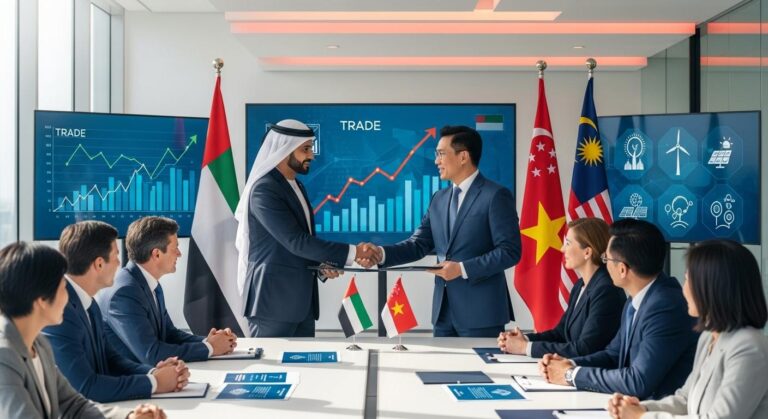
The economic relationship between the United Arab Emirates and Vietnam has grown steadily over the…

The United Arab Emirates continues to expand its global trade network through new economic and…